Introduction
Understanding the audience demographics of the Vande Bharat Express is vital for advertisers aiming to craft effective campaigns that resonate with the right passengers. The Vande Bharat train commands a premium status in India’s rail network, attracting a selective mix of travelers. This article provides a detailed overview of the passenger profiles — including age, occupation, income levels, travel purposes, and behavioral patterns — to help marketers optimize their advertising strategies and ROI.
1. Overview of Vande Bharat Passenger Profile
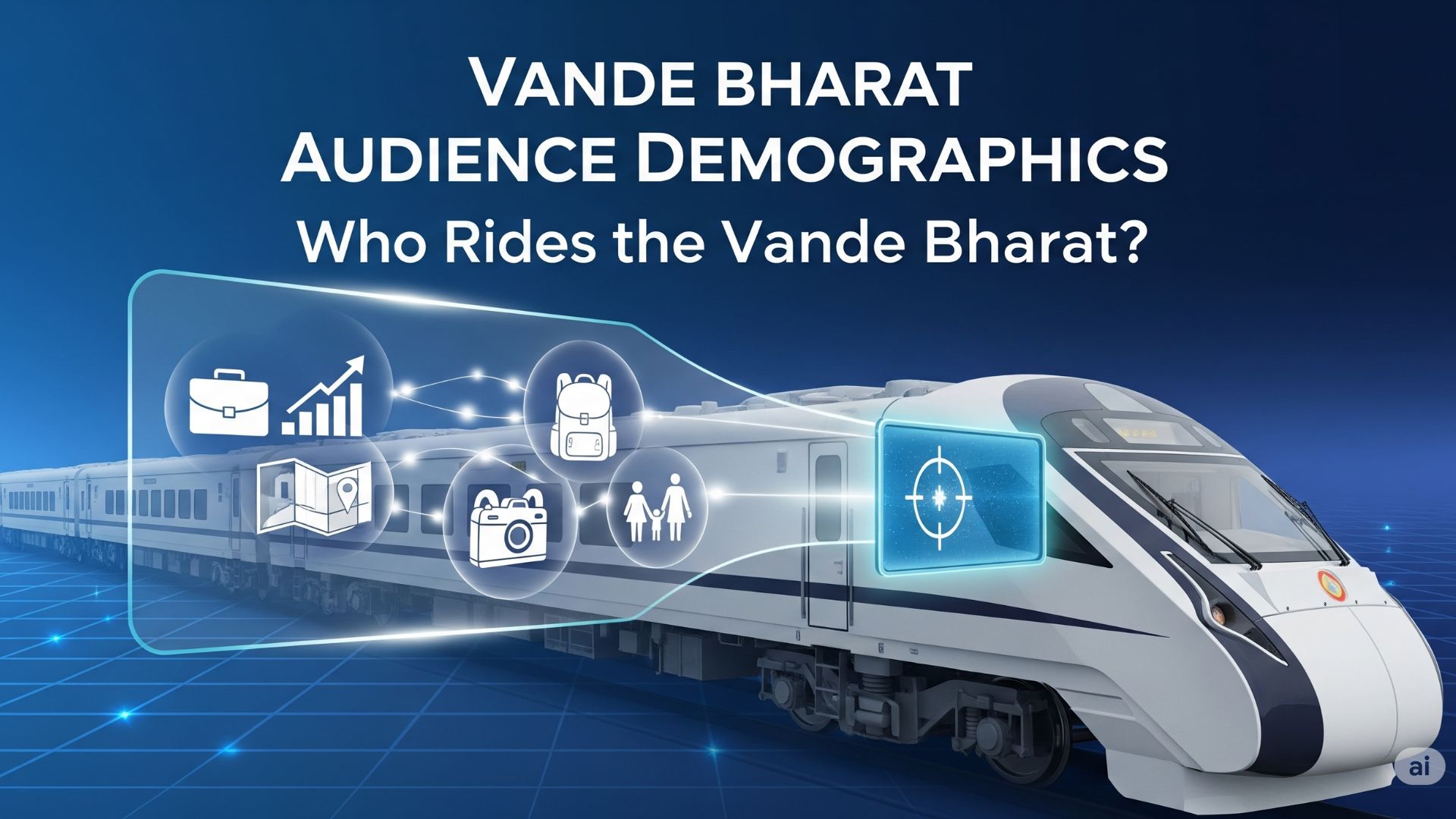
The Vande Bharat Express primarily serves middle-to-high income groups traveling on popular intercity routes. Passengers are typically:
- Professionals and business travelers
- Tourists and leisure travelers
- Government officials and corporate employees
- Students and academics (to a lesser extent)
This diverse yet upscale audience offers advertisers multiple touchpoints for targeted messaging.
2. Age Distribution
| Age Group | Approximate Percentage | Key Characteristics |
| 18-24 years | 10-15% | Young travelers, students, early professionals; tech-savvy and receptive to digital ads. |
| 25-40 years | 45-55% | Core working professionals, entrepreneurs, millennials with significant spending power. |
| 41-60 years | 25-30% | Senior professionals, managers, executives with stable income. |
| 60+ years | 5-10% | Retired or senior citizens, often traveling for leisure or family visits. |
The majority are young to middle-aged adults, aligning well with brands targeting working professionals and affluent consumers.
3. Occupation and Income Segments
- Corporate Professionals: Including IT, finance, consulting, and management, making up a large share of daily commuters.
- Entrepreneurs and Business Owners: Frequent travelers between cities for business expansion and networking.
- Government Employees: Officials moving between capitals along Vande Bharat routes.
- Tourists and Leisure Travelers: Domestic travelers exploring cultural and heritage sites along the train’s corridors.
- Students and Academics: Small but notable percentage, mostly on educational or examination trips.
Income levels tend to be medium to high, with many passengers falling into the middle and upper-middle class income brackets, reflecting the premium service positioning.
4. Travel Purpose and Frequency
- Business Travel: Approximately 60-70% of passengers use Vande Bharat for professional commitments due to its speed and convenience.
- Leisure and Tourism: 20-30% travel for tourism, holidays, or visiting family, especially on weekends and holidays.
- Education and Personal Reasons: Remaining percentage includes academic-related travel, health reasons, or other personal visits.
Frequent travelers include daily and weekly commuters between metro cities, while others use the service for occasional trips.
5. Behavioral Traits and Media Consumption
- Tech-Savvy: Majority of passengers are digitally connected, using smartphones, tablets, and laptops during their journeys—ideal for interactive and mobile-integrated campaigns.
- High Affinity for Premium Brands: Preference for quality products and services, including finance, technology, lifestyle, and luxury goods.
- Engagement with Transit Media: Longer journey durations mean passengers often interact with onboard advertising, increasing recall and brand engagement.
- Time-Sensitive and Information-Oriented: Passengers appreciate timely and useful information, making contextual and real-time ad messaging effective.
6. Geographic and Route Insights
- Vande Bharat connects metro hubs like Delhi, Mumbai, Ahmedabad, Varanasi, and more.
- Passengers typically travel between major economic and cultural centers, with strong urban-to-urban and urban-to-tier II/Tier III city traffic.
- Geographic diversity allows brands to target localized campaigns on specific routes based on regional product-market fit.
7. Implications for Advertisers
- Segmented Messaging: Tailor ads by age, occupation, and travel purpose to enhance relevance (e.g., business services for professionals, travel gear for tourists).
- Multi-Channel Engagement: Leverage digital screens, interactive kiosks, and mobile tie-ins that cater to tech-savvy commuters.
- Route-Specific Campaigns: Deploy geographically targeted ads to align with passenger origins and destinations.
- Time-of-Day and Frequency Optimization: Schedule ads to match passenger flow patterns (morning business travelers vs. weekend tourists).
Conclusion
The Vande Bharat Express serves a predominantly affluent, professional, and digitally connected passenger base, making it a highly attractive advertising platform. Understanding the detailed audience demographics enables brands to craft customized, high-impact campaigns that resonate effectively with passengers and maximize return on investment.
Are you ready to tailor your brand message to the discerning audience of the Vande Bharat Express? Collaborate with transit media experts to translate demographic insights into compelling advertising strategies.
Frequently Asked Questions (FAQs)
Q1: What is the most common passenger age group on Vande Bharat?
The 25-40 years age group forms the largest segment, consisting mainly of working professionals and entrepreneurs.
Q2: Do Vande Bharat passengers engage with digital advertising?
Yes, the majority are tech-savvy commuters who interact well with digital and interactive advertising formats.
Q3: Can advertisers target specific passenger segments?
While direct targeting is limited, route and time-based scheduling plus format selection enable effective segmentation.
Q4: Which routes have the highest passenger volumes?
Key routes like Delhi-Mumbai, Mumbai-Ahmedabad, and Delhi-Varanasi see the highest ridership and premium audience presence.