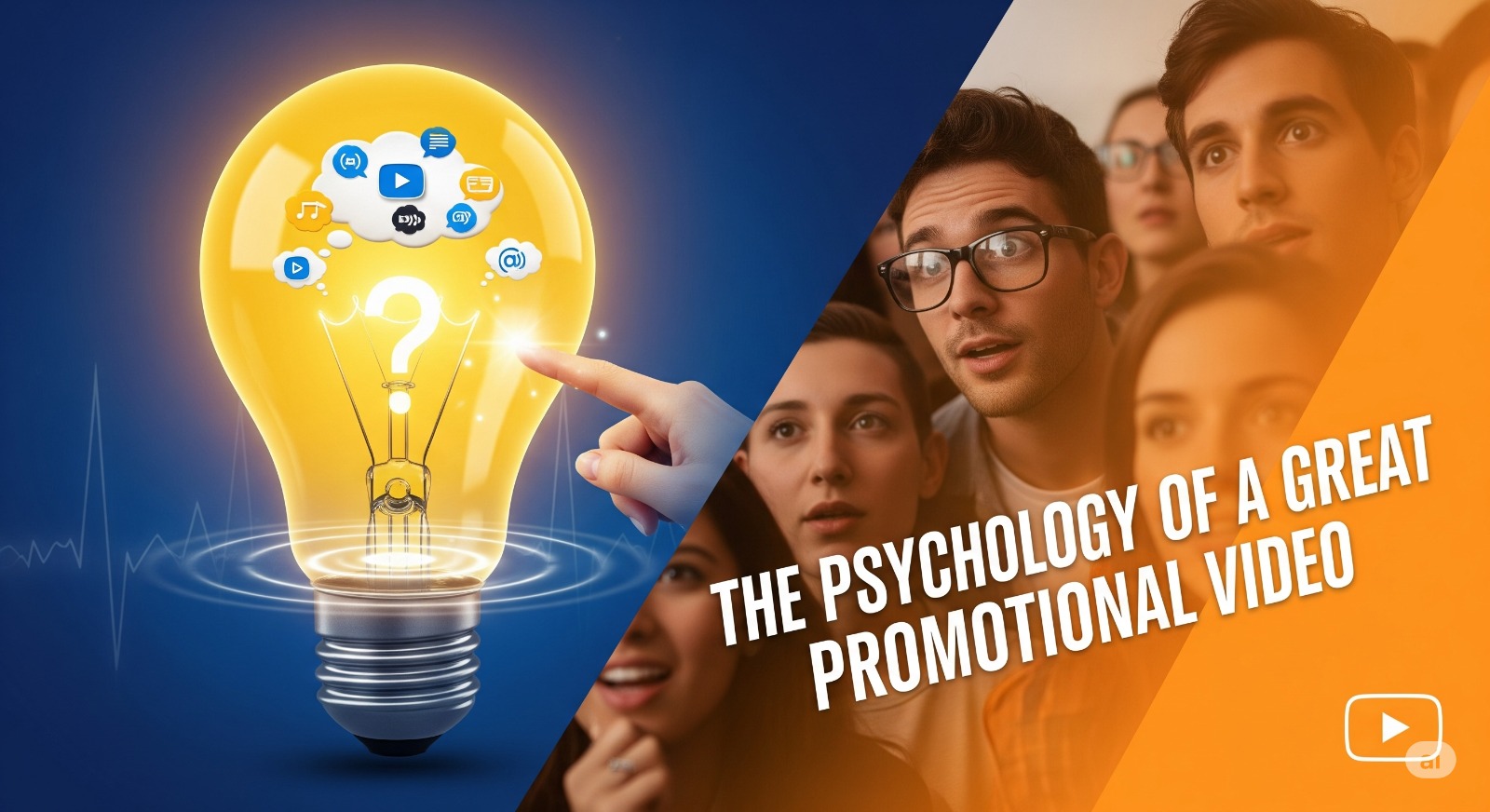
You’ve watched a thousand Promotional Video. Some you immediately forget, while others stick with you and even make you want to buy something. What’s the difference? It’s not just high-quality production—it’s psychology. The most successful videos aren’t just selling a product; they’re tapping into fundamental human emotions and cognitive biases to drive action.
This article will reveal the psychological triggers that make a promotional video truly effective, giving you the blueprint for creating content that not only looks good but also converts.
The Quick Answer: It’s All About Emotional Connection
A great promotional video “clicks” because it forges an emotional connection with the viewer. Instead of simply listing features, it leverages psychological principles to build trust, create desire, and inspire action. The goal isn’t to inform; it’s to persuade by making the viewer feel something that links your brand to a positive emotion or a desired outcome.
The Deep Dive: Key Psychological Triggers
Here are the core psychological principles that separate a good video from a great one:
- The Power of Emotion: People don’t buy based on logic; they buy based on emotion. A promotional video should evoke feelings like joy, inspiration, or empathy. Whether it’s a story of how your product solved a problem or an uplifting tale of your brand’s mission, an emotional connection is a direct path to the viewer’s wallet.
- The Principle of Social Proof: We are naturally inclined to follow the crowd. When we see others endorsing a product, we are more likely to trust it. Highlighting testimonials, featuring customer reviews, or showcasing influencers using your product are powerful ways to build credibility and make a viewer feel more secure in their decision.
- The Scarcity and Urgency Effect: We tend to place a higher value on things that are scarce or available for a limited time. Phrases like “Limited Stock Available” or “Offer Ends Soon” create a sense of urgency. A video can visually represent this by showing a timer counting down or highlighting limited edition products.
- The Reciprocity Principle: When someone does something nice for you, you feel a strong urge to do something nice in return. A promotional video can use this by giving viewers something of value for free—whether it’s an educational tip, a moment of entertainment, or a behind-the-scenes look. This gesture makes them more open to your brand’s message.
- The Bandwagon Effect: Similar to social proof, this principle states that people are more likely to adopt a trend if they see that many others are already doing so. A video can visually communicate popularity by showing large crowds using your product or by highlighting impressive sales figures, making the viewer feel like they are part of a desirable movement.
Real-World Examples: Seeing It in Action
- Emotional Storytelling: Videos from brands like Nike or Apple often don’t show the product until the very end. Instead, they tell a powerful story of perseverance and human achievement, leaving viewers with a feeling of inspiration that they subconsciously connect to the brand.
- Social Proof in Action: Think of product videos that feature interviews with multiple customers who all rave about the same solution. This repeated, positive endorsement from different people acts as powerful social proof.
- Urgency in a Visual: An e-commerce video might show a popular item being quickly added to carts and its stock counter dropping, creating an immediate fear of missing out.
Overcoming Challenges: The Importance of Authenticity
While these psychological triggers are effective, they must be used ethically. Audiences are savvy and can spot inauthentic attempts at manipulation from a mile away. The key is to:
- Be Truthful: Never fake testimonials or create artificial scarcity.
- Align with Your Brand: The emotions you evoke should be a natural extension of your brand’s values.
- Focus on Value: Your primary goal should be to provide value, with persuasion as a secondary, natural outcome.
A great promotional video is not an accident—it’s a masterclass in human psychology. By intentionally leveraging these principles, you can create a video that not only informs but also connects on a deeper level, transforming passive viewers into enthusiastic customers.