
Introduction
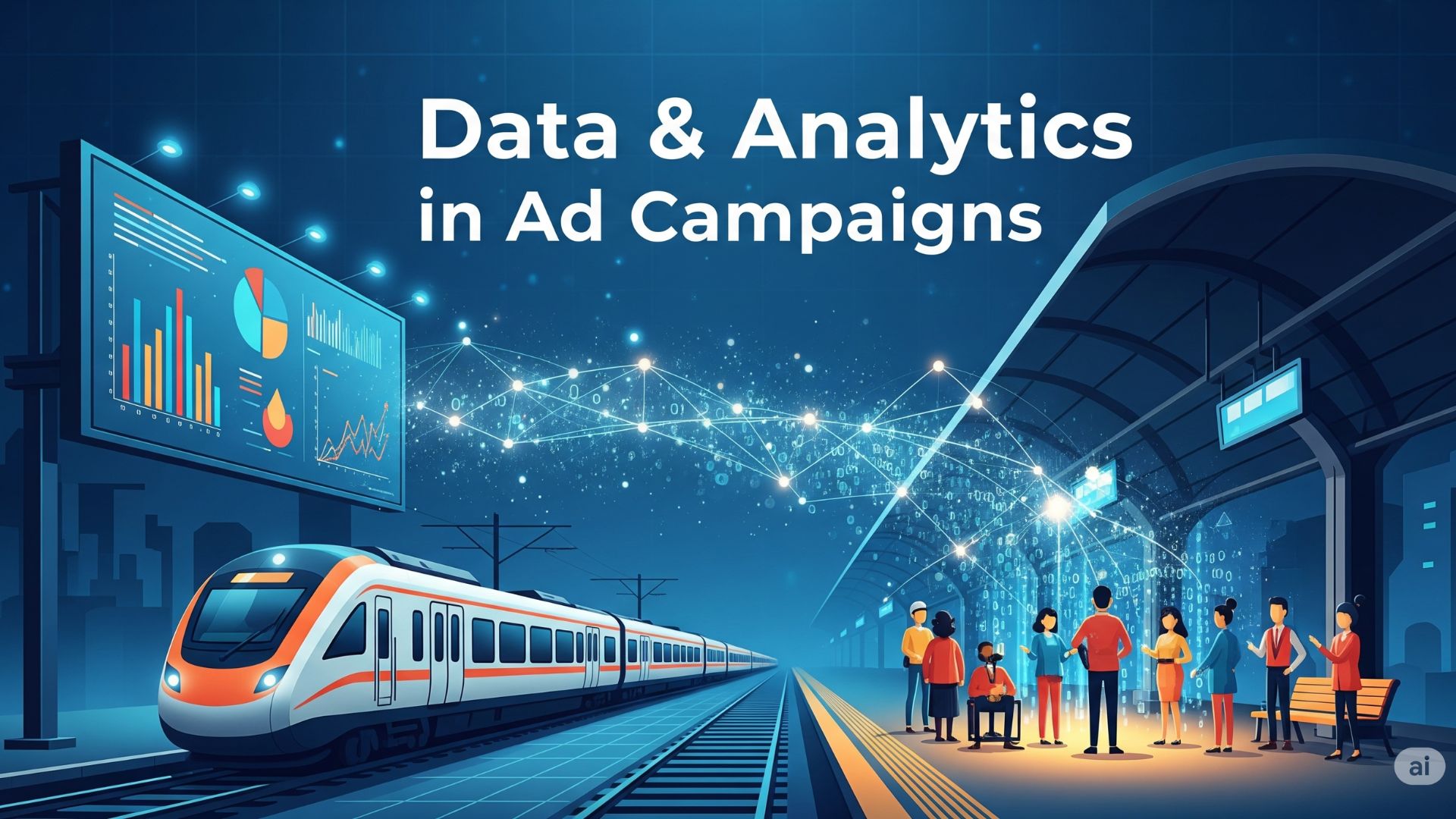
The railway station advertising landscape is undergoing a remarkable transformation driven by the power of data and analytics. As advertisers seek to maximize impact and ROI in this bustling and diverse environment, leveraging data-driven insights is becoming critical to designing smarter campaigns. Today, real-time analytics, audience measurement, and programmatic buying are revolutionizing how brands reach millions of daily commuters.
This article explores how data and analytics are shaping the future of railway advertising campaigns, enabling more precise targeting, powerful measurement, and greater campaign optimization.
1. The Growing Role of Data in Railway Advertising
The availability and sophistication of data—ranging from commuter demographics to footfall patterns—are enabling advertisers to move beyond traditional intuition-driven approaches to evidence-based decisions.
- Footfall sensors and cameras provide real-time passenger counts.
- Demographic data helps segment commuters by age, gender, income, and travel purpose.
- Historical travel data reveals peak times, dwell durations, and route preferences.
- Social media and mobile location data add layers of behavioral insights.
Using this data, campaigns can be tailored more effectively to reach the right audience in the right place at the right time.
2. Enhanced Audience Segmentation and Targeting
Data analytics enable granular segmentation of railway station audiences:
- Commuters: Daily travelers can be identified by their repeat presence and demographic profile.
- Tourists: Data on ticket types, destination patterns, and seasonal peaks help target visitors.
- Business Travelers: Premium ticket holders and express train users can be targeted with specialized messaging.
Advertisers leverage these segments to customize creatives, placements, and timing, ensuring relevance and improved engagement.
3. Real-Time and Programmatic Advertising
The integration of programmatic technology into railway station advertising is gaining momentum:
- Dynamic pricing and real-time bidding allow advertisers to purchase digital ad space instantaneously.
- Campaigns can adjust messaging based on time of day, commuter flow, weather, or local events.
- Automated content rotation maximizes message freshness and impacts diverse audiences.
Programmatic platforms improve efficiency and allow brands to optimize campaigns dynamically, reducing wastage and boosting campaign effectiveness.
4. Measuring Campaign Performance with Precision
Traditional out-of-home advertising faced challenges measuring exact impressions and engagement. Data and analytics are changing that:
- Sensors and cameras provide accurate footfall numbers linked to specific ad locations.
- Digital screens record interactions such as touches, scans of QR codes, and dwell time.
- Integration with mobile and social data helps track offline-to-online conversions.
- Surveys combined with data modeling estimate brand recall and sales impact related to campaigns.
These insights allow advertisers to justify spending, optimize media mix, and improve future campaign strategies.
5. Predictive Analytics and AI in Campaign Planning
Advanced analytics powered by artificial intelligence (AI) are enabling predictive modeling:
- Forecasting commuter patterns during different times, days, and seasons.
- Predicting which ad formats and messages will perform best in specific stations.
- Suggesting optimal budget allocation for maximum ROI across networked stations.
- Automating creative adjustments based on past campaign data and ongoing feedback.
Such capabilities empower marketers to design smarter, more adaptive campaigns with higher chances of success.
6. Integrating Online and Offline Data for Omnichannel Success
Data analytics facilitate bridging the gap between physical and digital advertising:
- Tracking QR or NFC interactions on station ads to online conversions.
- Linking mobile location data to exposure at railway stations plus subsequent web/app visits.
- Using customer CRM data to personalize ads shown on digital out-of-home screens.
- Coordinating campaigns with social media and mobile advertising to reinforce messaging.
This omnichannel approach deepens consumer engagement and amplifies overall campaign impact.
7. Challenges and Considerations in Data-Driven Railway Advertising
While data-powered advertising offers vast potential, challenges include:
- Data Privacy: Compliance with regulations such as GDPR requires cautious data handling and anonymization.
- Infrastructure Needs: Installing and maintaining sensors, cameras, and digital networks requires capital and operational resources.
- Data Integration: Combining disparate data sources into actionable insights requires technology investment and analytical expertise.
- Measurement Accuracy: Ensuring data validity and avoiding over-reliance on imperfect models.
Working with experienced media agencies and technology partners is crucial to navigate these challenges.
Conclusion
Data and analytics are transforming railway station advertising from guesswork to precision marketing. By harnessing rich commuter datasets, real-time measurement tools, and AI-driven insights, advertisers can deliver highly targeted, flexible, and measurable campaigns that better engage millions of travelers.
The future of railway advertising lies in leveraging data smartly—driving greater efficiency, effectiveness, and ROI for brands while enriching the commuter experience with relevant, timely messaging.
Are you ready to harness data and analytics to elevate your railway advertising campaigns? Collaborate with data-savvy transit media partners to unlock the full potential of next-generation transit advertising.
Frequently Asked Questions (FAQs)
Q1: What types of data are most useful for railway advertising campaigns?
Footfall counts, demographic profiles, mobile location data, ticketing information, and digital interaction metrics are key data sources.
Q2: How does programmatic advertising work in railway stations?
Advertisers bid for digital ad slots in real-time, enabling dynamic messaging changes based on audience and environmental factors.
Q3: Is commuter privacy at risk with data-driven advertising?
Reputable media owners ensure data is anonymized and adhere to privacy laws to protect individual identities.
Q4: Can small businesses benefit from data-driven railway advertising?
Yes, programmatic platforms and granular targeting can help small advertisers reach relevant audiences more cost-effectively.