Introduction
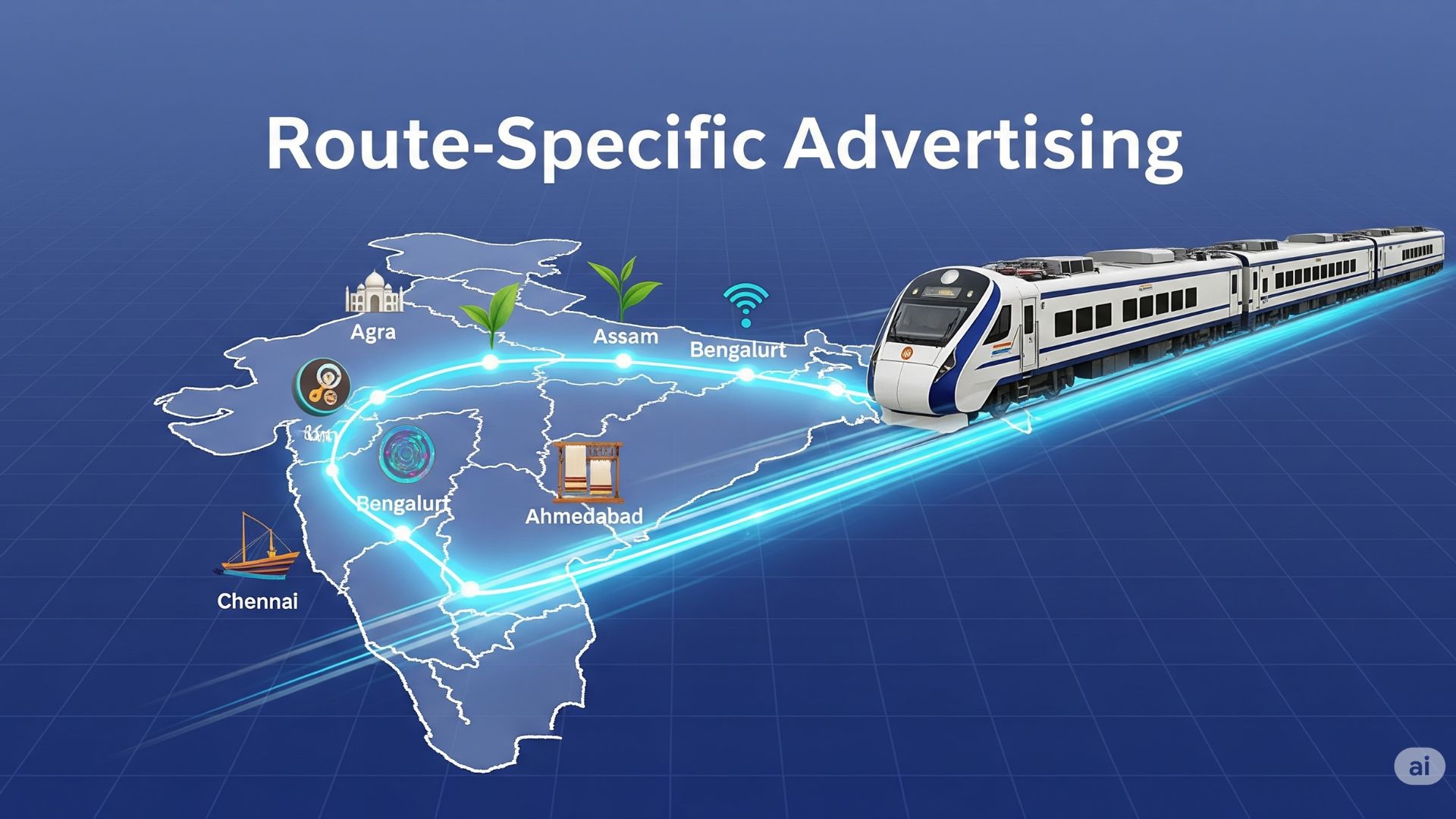
The Vande Bharat Express connects some of India’s most important metro cities and emerging urban centers, providing a unique opportunity for advertisers to engage specific audiences through route-focused campaigns. Targeting advertising by route allows brands to fine-tune their messaging, optimize budgets, and reach relevant consumer groups based on geographical and demographic factors. This article explains how route-specific advertising on Vande Bharat trains works, its benefits, and strategies to identify and maximize impact in key cities and regions.
1. Understanding the Importance of Route-Specific Advertising on Vande Bharat
- Geographic Relevance: Different routes connect diverse markets, each with unique demographic and economic profiles.
- Budget Optimization: Focusing on select routes reduces media spend wastage by concentrating efforts on high-potential areas.
- Targeted Messaging: Customizing ads for city-specific preferences or regional languages increases engagement and recall.
- Improved ROI: Tailored campaigns yield better response rates and measurable outcomes linked to local markets.
2. Key Vande Bharat Routes and Their Market Profiles
| Route | Key Cities Connected | Market Highlights | Ideal Advertiser Types |
| Delhi – Mumbai | Delhi, Jaipur, Kota, Vadodara, Mumbai | Strong business hubs, affluent commuters, large metro populations | Financial services, luxury brands, tech startups |
| Mumbai – Ahmedabad | Mumbai, Surat, Vadodara, Ahmedabad | Growing industrial centers, entrepreneurial audience | Real estate, FMCG, automobile, regional retail |
| Delhi – Varanasi | Delhi, Kanpur, Prayagraj, Varanasi | Mix of cultural heritage and emerging urban centers | Tourism, education, healthcare |
| Delhi – Lucknow | Delhi, Ghaziabad, Meerut, Lucknow | Growing educational and business centers | Educational services, IT, consulting |
| Mumbai – Goa | Mumbai, Mangaon, Goa | Leisure and tourism hubs | Travel and hospitality, lifestyle brands |
| Other Emerging Routes | Various Tier II and III cities | Expanding markets with increasing disposable incomes | SMEs, regional brands, consumer goods |
3. How to Choose the Right Routes for Your Campaign
Step 1: Define Your Target Audience and Market
- Identify which cities or regions your target consumers primarily reside or travel through.
- Consider economic activity, income levels, language preferences, and cultural factors.
Step 2: Analyze Passenger Demographics and Traffic on Routes
- Use ridership data and commuter profiles from transit media agencies or rail authorities.
- Assess route popularity, frequency of trains, and passenger density.
Step 3: Align Campaign Goals with Route Characteristics
- For brand awareness, consider high-traffic metro routes.
- For regional or local product launches, focus on less saturated, emerging city routes.
Step 4: Customize Creative Messaging
- Adapt language, visuals, and offers to resonate with local audiences or regional tastes.
- Highlight city-specific benefits if applicable (e.g., location-based deals).
4. Advantages of Route-Specific Vande Bharat Advertising
- Increased Relevance: Ads feel more personalized and relevant to passengers traveling on that route.
- Better Engagement: Targeted messaging improves attention, interaction, and recall rates.
- Cost Efficiency: Spend is optimized by avoiding irrelevant markets.
- Local Brand Building: Supports regional presence and market penetration through focused efforts.
- Agile Campaign Management: Routes can be added or changed based on marketing priorities and seasonality.
5. Examples of Effective Route-Specific Campaigns
- A real estate developer targeted the Mumbai-Ahmedabad route with visuals and offers tailored for local investors, leading to a 30% increase in inquiries from travelers on that corridor.
- A tourism board running ads on Delhi-Varanasi trains highlighted spiritual tourism packages, resulting in a significant rise in festival season bookings.
- An educational institution advertised on Delhi-Lucknow routes with regional language creatives, improving awareness among prospective students.
6. Booking and Execution Tips for Route-Specific Ads
- Coordinate closely with transit media agencies that provide detailed route inventories and pricing.
- Plan campaign timing according to regional events, festivals, and business cycles.
- Consider multi-route campaigns by bundling connected corridors for wider reach with local focus.
- Leverage digital ad formats for easy localization and real-time content updates.
- Monitor campaign performance by route to refine future targeting and creative.
Conclusion
Route-specific advertising on Vande Bharat Express trains empowers brands to reach the right cities and regions with precision and relevance. By understanding the unique characteristics and passenger demographics of each route, advertisers can craft highly effective campaigns that maximize engagement, optimize budgets, and deliver measurable results. Leveraging the premium positioning and extensive city connectivity of Vande Bharat, route-focused advertising stands as a powerful strategy for brands looking to scale visibility and impact across India’s dynamic markets.
Are you ready to target your ideal customers onboard Vande Bharat? Partner with transit media experts to create and execute route-driven campaigns tailored for success on India’s fastest and most prestigious trains.
Frequently Asked Questions (FAQs)
Q1: Can I advertise on multiple routes simultaneously?
Yes, media vendors offer bundled packages that allow multi-route advertising for broader coverage.
Q2: How do I get passenger data for specific Vande Bharat routes?
Authorized transit media agencies and Indian Railways may provide ridership data and demographic insights for route planning.
Q3: Are route-specific ads more expensive than general campaigns?
Costs vary; while targeting specific routes can sometimes reduce waste, certain high-demand routes may attract premium pricing.
Q4: Can I customize ads in different languages for different routes?
Yes, creative localization is encouraged to enhance relevance and passenger engagement.