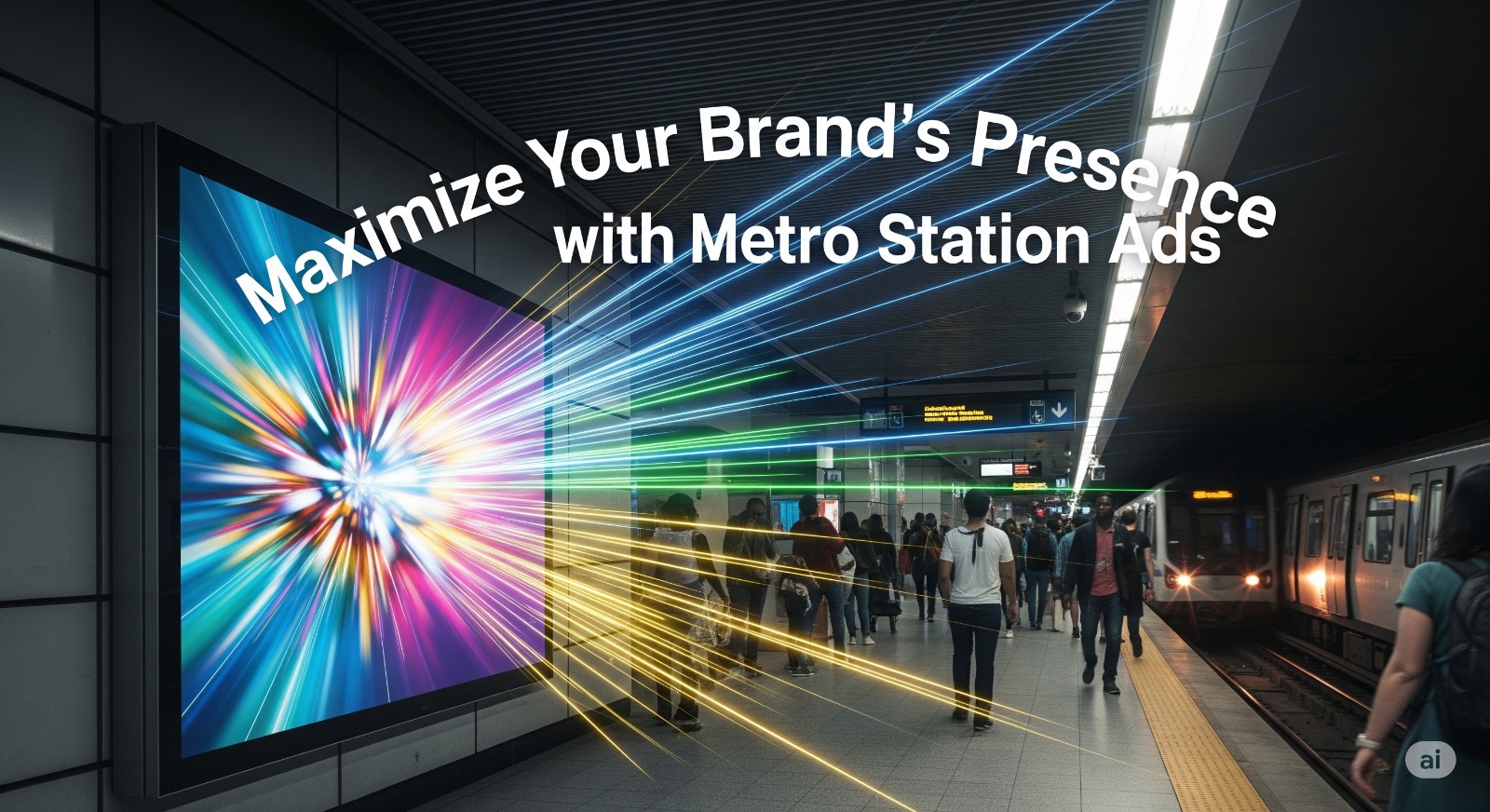
Metro rail advertising is not just limited to trains and digital screens anymore. One of the most powerful yet underutilized avenues is Station ads branding — leveraging high-traffic metro stations’ physical spaces such as walls, pillars, ticket gates, ceilings, and escalators to create immersive brand experiences. In 2025, station branding has become a cornerstone of metro advertising strategies, offering unparalleled visibility and engagement for brands across India’s sprawling urban networks.
Why Station Branding is a Game-Changer
Metro stations are hubs of constant footfall, often serving millions of commuters daily. Unlike fleeting ads inside trains, station branding allows brands to capture long dwell times in waiting areas, corridors, and entrances. Here’s why brands are flocking to station branding:
- High Frequency & Dwell Time: Commuters spend several minutes waiting, making stationary ads more memorable.
- Large Canvases: Walls, pillars, ceilings, and gates offer vast surfaces for creative, eye-catching visuals.
- Multiple Sightlines: Ads can be viewed from different angles and distances, increasing recall.
- Brand Authority: Ads in metro stations often enjoy government approval, adding credibility.
- Hyperlocal Targeting: Brands can choose stations based on demographics and locality, ensuring relevance.
Popular Station Branding Formats in 2025
- Wall Wraps & Murals
Gigantic wall panels along station platforms and corridors provide a dramatic backdrop perfect for impactful visuals or story-telling campaigns.
- Pillar Wraps
Cylindrical pillars throughout stations are ideal for 360-degree branding. Due to their repetitive spread, they reinforce your message throughout foot traffic zones.
- Ticket Gate Branding
The entry and exit points are prime real estate. Customized panels around ticket gates grab commuter attention right at the start and end of their journey.
- Ceiling & Overhead Panels
Ads suspended or painted on ceilings create immersive brand moments, especially in spacious waiting areas or concourses.
- Escalator & Elevator Cladding
Branding on escalators, staircases, and elevators turns otherwise idle transit moments into brand engagement opportunities.
- Floor Graphics
Walking commuters can’t ignore colorful floor stickers and arrows, making stations highly creative and interactive ad spaces.
- Digital Screens and Interactive Panels
Combining static branding with digital and interactive technology, these smart displays engage audiences with motion, video, and real-time content.
How to Maximize Your Impact with Station Branding
- Know Your Audience: Choose stations with maximum footfall of your target demographic, whether students, professionals, families, or tourists.
- Creative Storytelling: Use the expansive space to tell a brand story or create thematic experiences rather than just simple logos.
- Synergize Formats: Combine various station assets (pillars, walls, gates) for consistent and repeated brand exposure.
- Leverage Data: Use metro commuter analytics to select times and stations that align with your campaign goals.
- Integrate Offline & Online: Link station ads with QR codes or social media calls-to-action for amplified engagement.
- Work with Experts: Collaborate with metro advertising agencies to navigate approvals, design impactful layouts, and manage logistics.
Cost Considerations and Booking Process
Station branding costs vary depending on location, size, duration, and format. For example:
| Format | Approximate Cost per Month (Delhi Metro) |
| Wall Wraps | ₹5,00,000 – ₹12,00,000 |
| Pillar Wraps | ₹50,000 – ₹2,00,000 per pillar |
| Ticket Gate Ads | ₹1,00,000 – ₹3,00,000 |
| Ceiling Panels | ₹3,00,000 – ₹8,00,000 |
Booking usually requires advance applications through metro authorities or authorized agencies. Companies often bundle station branding with other metro media for discounts or package deals.
Case Study: How a Leading FMCG Brand Dominated Station Branding
A top FMCG brand recently booked wall wraps, pillar branding, and escalator panels across 5 busy metro stations in Mumbai during a festival season. The campaign generated a 35% increase in brand recall according to a commuter poll and significantly boosted footfall in nearby retail outlets. The immersive multi-format presence made the brand impossible to miss for daily commuters.
Final Thoughts
Station branding in metro rail systems offers dynamic and tangible ways to connect with millions of urban consumers daily. By capitalizing on the large physical spaces within metro stations—walls, pillars, ticket gates, ceilings, and escalators—brands can create immersive, memorable experiences that outshine traditional advertising formats.