Meta Description:
Explore how direct mail print advertising works, why it remains effective in 2025, and best practices to maximize your campaign ROI.
Table of Contents
- Introduction
- What Is Direct Mail Print Advertising?
- Why Direct Mail Still Works in the Digital Age
- Types of Direct Mail Print Advertising
- How to Plan a Successful Direct Mail Campaign
- Measuring the Success of Your Direct Mail Campaign
- Common Mistakes to Avoid in Direct Mail Advertising
- FAQs About Direct Mail Print Advertising
- Conclusion
- Call to Action
1. Introduction
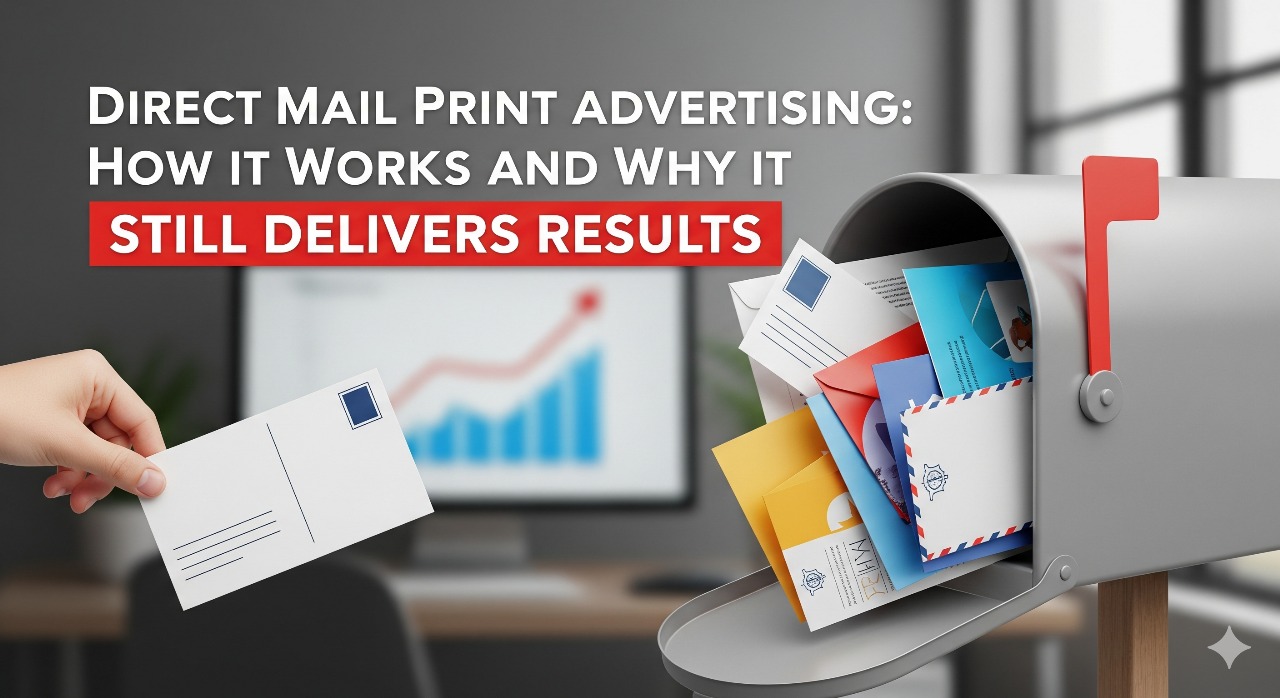
In an era dominated by digital marketing, direct mail print advertising remains a surprisingly powerful tactic for businesses seeking personalized, tangible connections with their audience. This evergreen method still produces impressive response rates and drives customer engagement when executed strategically.
In this article, we’ll cover what direct mail print advertising entails, why it continues to succeed in 2025, and practical tips you can use to craft compelling campaigns.
2. What Is Direct Mail Print Advertising?
Direct mail print advertising involves sending physical promotional materials—such as postcards, catalogs, brochures, or flyers—directly to targeted recipients’ mailboxes. It’s a form of one-to-one marketing designed to grab attention offline and prompt a response, whether that’s making a purchase, visiting a website, or attending an event.
3. Why Direct Mail Still Works in the Digital Age
- High Engagement and Response Rates: Direct mail achieves an average response rate of about 9%, vastly outperforming email and many digital ads.
- Tangibility Builds Trust: Physical mail is perceived as more trustworthy compared to digital spam or ads.
- Less Competition: With inboxes flooded by emails, physical mail stands out more and rarely faces digital ad blockers.
- Customization & Personalization: Modern printing technology allows for highly targeted and personalized messages.
- Works Well for Local & Niche Markets: Ideal for community outreach, event invitations, and localized promotions.
4. Types of Direct Mail Print Advertising
- Postcards: Cost-effective, attention-grabbing, and easy to design.
- Brochures & Catalogs: Perfect for detailed product or service info.
- Letters with Inserts: Formal and professional, good for B2B marketing.
- Dimensional Mailers: Unique packages that create a lasting impression.
- Coupons & Gift Cards: Incentives that encourage immediate response.
5. How to Plan a Successful Direct Mail Campaign
- Define Your Objective: Brand awareness, lead generation, event promotion, etc.
- Target Audience Segmentation: Use demographic, geographic, or behavioral data.
- Compelling Creative & Offer: Design eye-catching mailers with clear calls to action.
- Select Mailing List Carefully: Quality over quantity is key for better ROI.
- Timing & Frequency: Plan mailing dates strategically and consider follow-ups.
- Leverage Personalization: Use variable data printing to tailor messages to recipients.
6. Measuring the Success of Your Direct Mail Campaign
Track metrics such as:
- Response rate (calls, inquiries, website visits via URLs or QR codes)
- Conversion rate (actual sales or sign-ups)
- ROI (return on investment considering all costs)
- Customer feedback and repeat business
- Postal tracking and delivery success rates
7. Common Mistakes to Avoid in Direct Mail Advertising
- Sending untargeted or outdated mailing lists
- Overloading mailers with too much information
- Lacking a clear and compelling call to action
- Ignoring mobile-friendly or online integration options (QR codes)
- Skipping print quality checks and proofs
- Underestimating postage and distribution logistics
8. FAQs About Direct Mail Print Advertising
Q1: How much does a direct mail campaign cost?
A: Costs vary depending on design, print volume, mailing list quality, and postage, but effective campaigns can be budgeted affordably with proper planning.
Q2: Can direct mail be integrated with digital marketing?
A: Yes, using QR codes, personalized URLs (PURLs), and social media prompts boosts engagement and tracking.
Q3: How often should I send direct mail?
A: Typically, 3-4 mailings per year work well, but can vary based on goals and audience preferences.
Q4: What size mailing list do I need?
A: Start with a smaller, highly targeted list and expand as you analyze results to maximize ROI.
9. Conclusion
Direct mail print advertising remains a highly effective marketing channel because of its personalized, tactile nature and strong consumer trust. When combined with smart targeting and modern print and digital integration techniques, it continues to deliver compelling results even in 2025.
10. Call to Action
Ready to launch a direct mail campaign that drives real results?
Contact us today to get expert help with design, printing, and distribution tailored to your business needs!
Or Download our free Direct Mail Campaign Planner to start strategizing your next campaign.
SEO & Engagement Highlights:
- Targeted keyword usage: “direct mail print advertising,” “direct mail campaign,” “print advertising 2025”
- Clear sections and bullet points aid readability and featured snippet chances
- Incorporates transactional and informational user intent
- FAQs address common concerns and boost page relevance
- Strong CTAs encourage lead generation and further engagement