Introduction
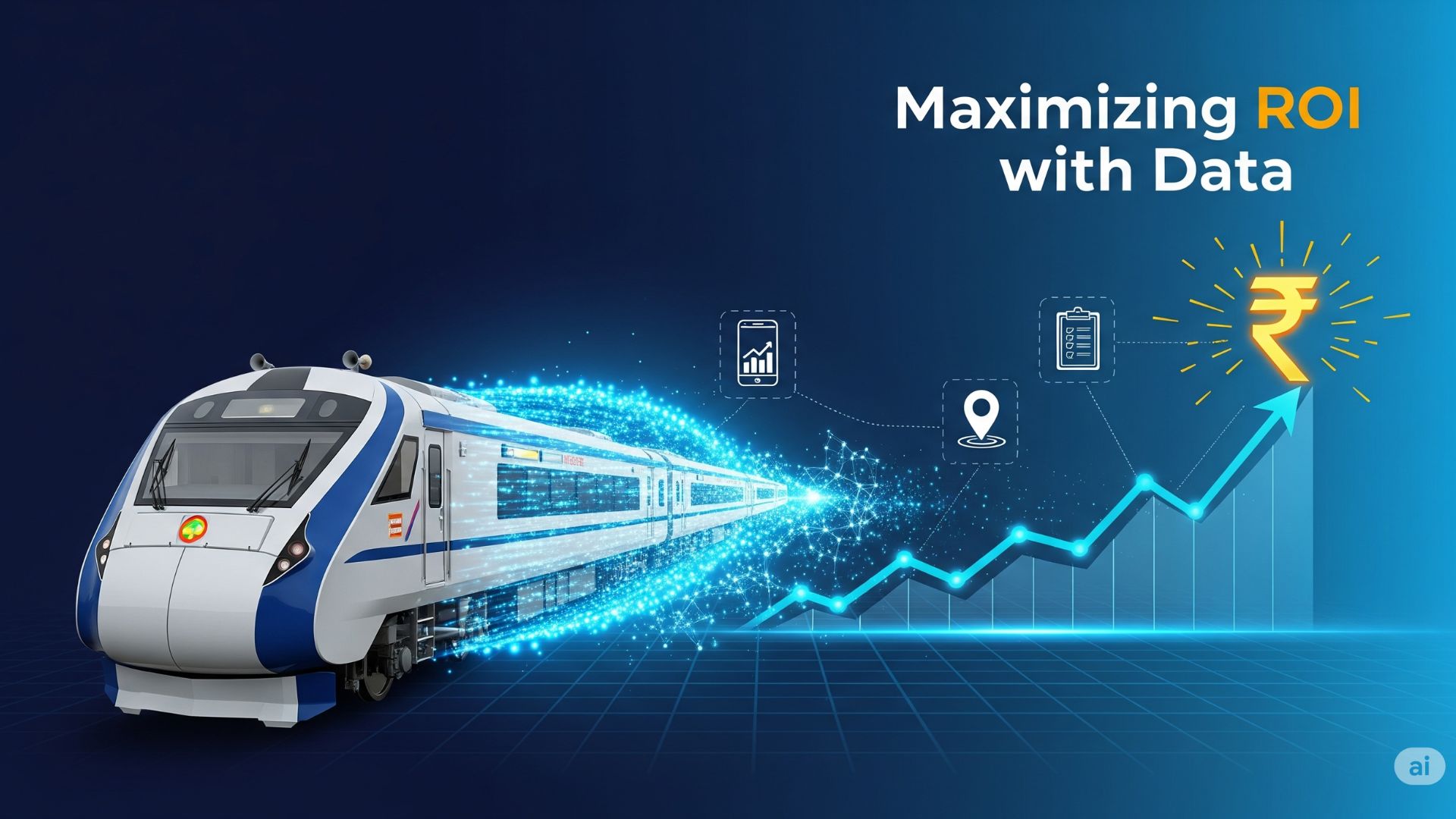
As the Vande Bharat Express establishes itself as a premier advertising platform, brands are increasingly seeking ways to optimize their campaigns through data-driven strategies. Leveraging passenger data, digital ad metrics, and targeted insights can significantly enhance campaign effectiveness and maximize return on investment (ROI). This article explores how advertisers can use data intelligence to plan, execute, and measure high-impact Vande Bharat advertising campaigns.
1. Why Data-Driven Advertising Matters on Vande Bharat
- Precise Targeting: Data helps identify key passenger demographics, routes, and travel patterns for focused campaign delivery.
- Optimized Budget Allocation: Insights enable brands to invest in high-performing formats and routes, reducing media wastage.
- Enhanced Engagement: Customized messaging based on data increases relevance, fostering higher recall and interaction.
- Continuous Improvement: Real-time and post-campaign analytics provide actionable feedback for ongoing optimization.
- Competitive Advantage: Data-driven campaigns outperform generic ads, delivering measurable business outcomes.
2. Key Data Sources for Vande Bharat Advertising
a. Passenger Demographics and Travel Data
- Age, gender, occupation, and income profiles of commuters.
- Popular routes, peak travel times, and journey durations.
- Purpose of travel — business, leisure, education — for messaging alignment.
b. Digital Ad Performance Metrics
- Impressions, dwell time, video completions, and interaction rates on digital screens.
- QR code scans and mobile app engagements linked to onboard ads.
- Audio ad reach and listener feedback where applicable.
c. External Market and Sales Data
- Regional market performance correlated with advertised routes.
- Sales uplift, footfall, or lead generation tracked via promo codes or linked campaigns.
- Consumer feedback and brand recall surveys.
3. Strategies to Leverage Data for Maximum ROI
Step 1: Define Clear KPIs and Objectives
- Identify goals such as brand awareness, lead generation, app downloads, or sales lift.
- Align KPIs with measurable metrics available through transit media platforms.
Step 2: Segment Audience and Routes
- Use demographic and travel data to select routes and times that reach your target customers.
- Prioritize high-value passenger segments such as business travelers or premium commuters.
Step 3: Select and Optimize Ad Formats Based on Data
- Choose digital video, exterior wraps, seatback ads, or audio spots based on past performance data and cost-efficiency.
- Test variations of creatives for engagement and tweak according to analytics.
Step 4: Implement Tracking Mechanisms
- Integrate QR codes, UTM parameters, and unique promo codes in ads to monitor engagement.
- Partner with media vendors providing detailed campaign dashboards and real-time data.
Step 5: Analyze and Adapt
- Review campaign metrics regularly to identify underperforming elements.
- Reallocate budget to high-performing routes or formats mid-campaign if possible.
- Use passenger feedback and sales data to refine messaging and targeting for future campaigns.
4. Technologies Enhancing Data-Driven Vande Bharat Advertising
- Programmatic Advertising: Automated buying and placement of digital ads based on real-time data and audience targeting.
- AI and Machine Learning: Advanced analytics tools predicting passenger behavior and optimizing campaign delivery.
- Mobile Integration: Onboard Wi-Fi and mobile device engagement data for personalized ad experiences.
- Interactive Analytics Platforms: Dashboards providing detailed insights on ad views, interactions, and demographics.
5. Case Study: Data-Driven Success on Vande Bharat
A leading FMCG brand utilized passenger data and digital engagement metrics to target affluent commuters on Delhi-Mumbai routes. By running a mix of digital screen ads with QR code activations:
- They achieved a 30% higher engagement rate compared to their previous generic OOH campaigns.
- Real-time data allowed mid-campaign creative tweaks, increasing CTR by 20%.
- Sales uplift in targeted cities rose by 25%, attributing success to data-led optimization.
6. Challenges in Data-Driven Transit Advertising and How to Overcome Them
| Challenge | Solution |
| Limited passenger data granularity | Collaborate with authorized media agencies for detailed insights and surveys |
| Variable connectivity on trains | Use offline-engagement formats like QR codes linked to subsequent digital touchpoints |
| Data privacy concerns | Ensure compliance with data protection regulations and transparent user consent |
| Integration of multiple data sources | Implement centralized analytics platforms to consolidate and analyze disparate datasets |
Conclusion
Harnessing data-driven strategies in Vande Bharat advertising empowers brands to deliver more relevant, impactful campaigns that maximize ROI. From precise audience segmentation and targeted route selection to real-time optimization and detailed analytics, data insights transform traditional transit ads into measurable business drivers.
Are you ready to elevate your Vande Bharat advertising through smart data use? Partner with specialized transit media experts and analytics providers to unlock the full potential of data-driven campaigns on India’s fastest and most prestigious trains.
Frequently Asked Questions (FAQs)
Q1: How can I access passenger data for Vande Bharat routes?
Authorized transit media vendors and Indian Railways provide aggregated, anonymized demographic and ridership data for advertisers.
Q2: What digital metrics are available for Vande Bharat ad campaigns?
Metrics typically include impressions, video plays, interaction rates, QR code scans, and app downloads linked to campaigns.
Q3: Is programmatic advertising available on Vande Bharat trains?
Programmatic buying is emerging on select digital screens, enabling real-time, data-informed ad placements.
Q4: How do I ensure data privacy compliance in transit advertising?
Work with vendors who follow Indian data protection laws and use opt-in mechanisms for interactive ads involving personal data.