Introduction
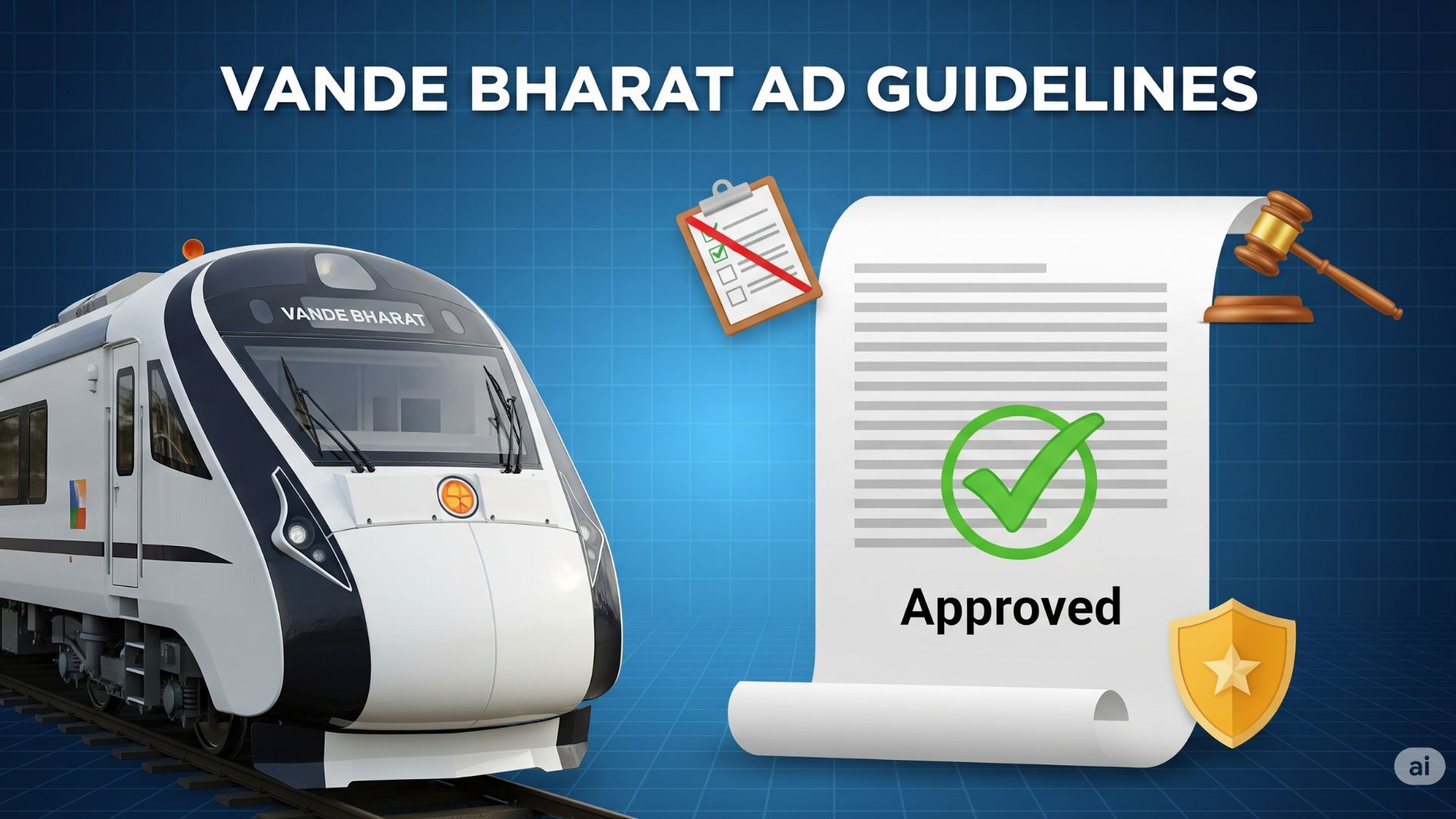
Advertising on the Vande Bharat Express offers brands a prestigious platform to reach a premium and captive audience across key Indian cities. However, to maintain the train’s high standards and ensure passenger safety and comfort, the Indian Railways and related authorities enforce strict advertising guidelines and permissions. This article walks advertisers through the essential rules, legal compliances, and approval processes necessary to execute seamless and compliant campaigns on Vande Bharat trains.
1. Why Adhering to Guidelines and Permissions Is Crucial
- Maintaining Passenger Experience: Ads must be appropriate and non-intrusive to maintain the comfort and enjoyment of travelers.
- Safety Compliance: Advertising materials should never obstruct safety signs, emergency exits, or important operational information.
- Legal Requirements: Indian laws prohibit certain types of content, and compliance avoids legal repercussions.
- Railway Policies: Indian Railways reserves the right to approve or reject ad content based on national, social, and cultural ethos.
- Brand Reputation: Following guidelines reflects brand professionalism and respect toward passengers and authorities.
2. Overview of General Advertising Policies on Vande Bharat
- Content Restrictions: No advertisements promoting tobacco, alcohol, gambling, political messaging, religious proselytization, or offensive and sensitive material.
- Cultural Sensitivity: Ads must respect local customs, languages, and diversity.
- Language Use: Use clear and polite language; regional language versions may be required depending on routes.
- No Obstruction: Ads cannot cover windows, emergency equipment, safety instructions, or any passenger information panels.
- Size and Placement Limits: Specific size parameters exist for interior and exterior ad spaces to maintain uniformity and safety.
- Digital Ad Standards: Digital screens should not display flashing lights or animations that dazzle or distract passengers.
3. Permissions and Approval Process for Vande Bharat Advertising
Step 1: Submit Advertising Proposal
- Advertisers or agencies present detailed creative concepts, ad formats, placement plans, and campaign duration to authorized transit media agencies.
- Must include full artwork, technical specs, and compliance certifications.
Step 2: Initial Screening by Media Agency
- Media vendors check submissions for adherence to Indian Railways guidelines and flag any content concerns.
- Preliminary revisions may be suggested.
Step 3: Approval by Indian Railways Authorities
- Final approval is required from Indian Railways’ Commercial and Marketing departments.
- This process may take 2–4 weeks depending on complexity and content sensitivity.
Step 4: Production and Installation Clearance
- Once approved, production of ad materials must use approved vendors and materials that meet safety and durability standards.
- Installation schedules must be coordinated with railway operations to ensure minimal disruption.
Step 5: Ongoing Monitoring and Compliance
- Advertisements are subject to periodic inspections during campaigns to ensure continued compliance.
- Non-compliance can lead to immediate removal and penalties.
4. Technical and Material Guidelines
- Materials: Use fire-retardant, durable, and non-reflective materials for exterior and interior ads.
- Digital Content: Formats must meet resolution, brightness, and duration criteria that suit train lighting and passenger comfort.
- Installation: Ad fitting should not damage train surfaces or interfere with operations.
5. Common Reasons for Ad Rejection or Removal
- Content violating Indian laws or railways’ ethical codes.
- Ads obstructing safety information or windows.
- Use of offensive or politically sensitive imagery or language.
- Overly bright, flashing, or distracting digital content.
- Installation performed outside approved methods or timelines.
6. Tips for Smooth Approval and Compliance
- Engage experienced transit media vendors familiar with Vande Bharat guidelines.
- Plan submissions and campaigns well ahead of desired launch dates to accommodate approval lead times.
- Use culturally respectful, legally vetted creative assets.
- Collaborate with designers and producers who specialize in transit advertising materials.
- Maintain clear communication with railway authorities and vendors through all project phases.
Conclusion
Understanding and adhering to Vande Bharat advertising guidelines and permissions is essential for brands aiming to leverage this premium transit platform without legal or operational hitches. Careful planning, culturally sensitive content, and strict compliance ensure smooth approval, enhanced passenger experience, and positive brand association. For a successful and hassle-free Vande Bharat campaign, collaborating with authorized vendors and respecting the railway’s policies is non-negotiable.
Are you ready to navigate the Vande Bharat advertising approval process confidently? Contact certified transit media agencies to guide you through compliant, impactful, and timely campaign execution on India’s flagship trains.
Frequently Asked Questions (FAQs)
Q1: How long does the approval process for Vande Bharat advertisements usually take?
Typically 2 to 4 weeks, depending on the content complexity and adherence to guidelines.
Q2: Are there any prohibited advertisement categories on the Vande Bharat trains?
Yes, ads promoting tobacco, alcohol, gambling, political or religious messages, and offensive content are strictly prohibited.
Q3: Can advertisement content be customized for different routes?
Yes, but all customized content must still adhere to the national and railway advertising guidelines.
Q4: What happens if an advertisement violates guidelines after deployment?
The railway authorities can remove the offending ads immediately, and the advertiser may face penalties.