Introduction
Creating eye-catching and effective advertisements on the Vande Bharat Express requires thoughtful design tailored to the unique transit environment. With passengers encountering multiple ad formats—from exterior wraps to digital screens and seatback panels—designing for clarity, impact, and engagement is essential to maximize your brand’s visibility and message retention. This article provides practical design tips and best practices to help marketers and creatives build compelling and high-impact train advertising campaigns specifically for Vande Bharat trains.
1. Understand the Unique Transit Advertising Environment
- Limited Attention Span: Passengers often glance quickly at ads during boarding, seating, or while moving around the coach.
- Viewing Distance Variability: Exterior ads are visible from long distances; interior ads vary from close-up seatbacks to corridor panels.
- Lighting Conditions: Interior lighting can vary based on natural light and time of day, affecting ad visibility and colors.
- Motion and Distraction: Train movement and passenger activity affect how quickly and attentively ads are perceived.
2. Design for Clarity and Simplicity
- Use Bold, Clear Typography: Choose large, legible fonts with high contrast against backgrounds for maximum readability.
- Limit Text Amount: Convey key messages in as few words as possible; focus on slogans, benefits, and calls-to-action (CTAs).
- Strong Visual Hierarchy: Highlight the brand logo, main message, and CTA clearly using size and color differentiation.
- Consistent Branding: Maintain brand colors and imagery to build recognition even in brief passenger encounters.
3. Leverage Vibrant Colors and High-Contrast Visuals
- Eye-Catching Palettes: Use bright, saturated colors that stand out amidst the train’s interior or exterior environment.
- Contrast Matters: Ensure text and important elements pop against backgrounds to avoid message dilution.
- Avoid Overcrowding: White space is a design asset—avoid clutter and allow the design elements to breathe.
4. Tailor Designs to Ad Format and Placement
Exterior Wrapping Designs
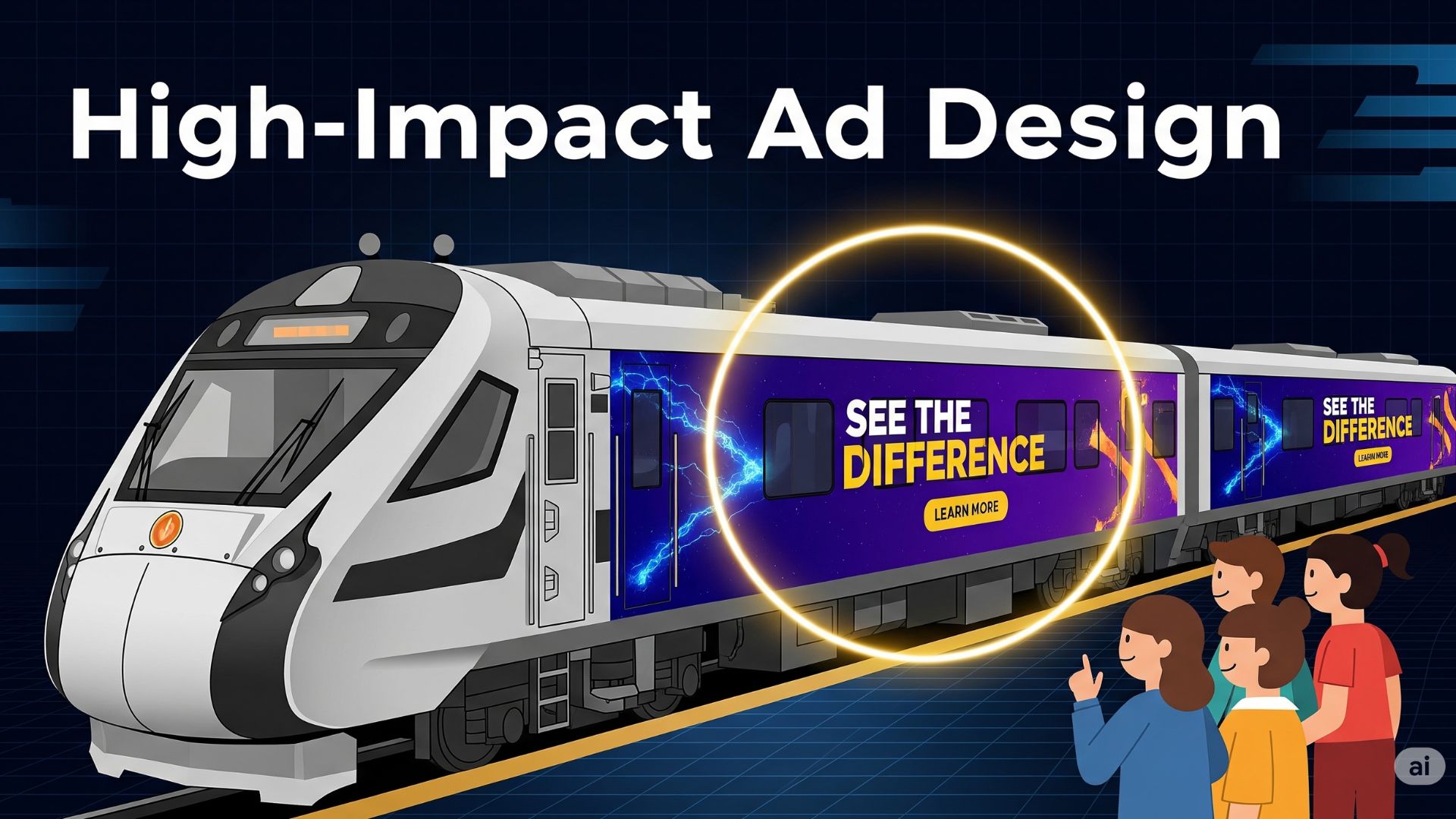
- Create large-scale, bold messaging visible at a glance even when the train is moving.
- Use dynamic, sweeping graphics that complement the coach’s shape and contours.
- Consider branding on doors and windows carefully to avoid obstructing functionality or safety info.
Interior Digital Screens
- Use motion and animation with smooth transitions to attract and retain attention.
- Incorporate sound carefully if applicable, aligning with the brand voice and passenger comfort.
- Schedule content in looped segments lasting between 15-30 seconds for optimal engagement.
Seatback & Tray Table Ads
- Focus on concise value propositions and direct CTAs since the viewing area is limited.
- Use close-up product images or service offers that passengers can easily absorb while seated.
- Consider adding QR codes or short links for easy digital follow-ups.
Corridor & Vestibule Panels
- Use vertical or portrait-oriented designs optimized for narrow spaces.
- Place logos and essential info at eye level; support with bold visuals.
5. Incorporate Interactive and Multimedia Elements
- Use QR codes that integrate seamlessly with the visual design for easy scanning.
- Develop complementary audio or video ads to enhance multi-sensory engagement.
- Design for mobile compatibility when integrating with onboard Wi-Fi or app tie-ins.
6. Optimize for Brand Recall and Action
- Use Memorable Taglines: Simple, catchy phrases that stay with commuters beyond the journey.
- Highlight Unique Selling Points (USPs): What sets your brand or offer apart must be instantly clear.
- Strong, Clear CTAs: Encourage actions like visiting websites, scanning QR codes, or downloading apps with actionable language.
7. Test Designs in Realistic Settings
- Preview designs in 3D mock-ups or on actual Vande Bharat interiors/exteriors if possible.
- Gather feedback from sample passenger groups to understand how ads read and resonate.
- Adjust colors and sizes to accommodate lighting and movement challenges.
8. Follow Compliance and Safety Guidelines
- Adhere to Indian Railways’ advertising standards regarding content, placement, and visibility.
- Ensure designs do not obstruct safety signs, emergency exits, or passenger movement.
- Use non-reflective, durable materials that meet safety and maintenance requirements.
Conclusion
Designing high-impact advertising for the Vande Bharat Express demands a nuanced understanding of the transit environment, passenger behavior, and media formats. By focusing on clarity, bold visuals, audience-appropriate messaging, and interactive elements, brands can unveil compelling ads that capture attention, foster engagement, and drive meaningful action.
Are you ready to create train advertisements that stand out and resonate with India’s premium rail passengers? Collaborate with specialized transit media designers and agencies to develop creative campaigns that maximize your brand’s visibility and impact on the Vande Bharat Express.
Frequently Asked Questions (FAQs)
Q1: How much text should be included in Vande Bharat train ads?
Keep text minimal—ideally under 10 words for exterior ads and under 20 words for interior ads to maximize quick comprehension.
Q2: Are animated ads effective on Vande Bharat digital screens?
Yes, motion captures attention, but loops should be short (15-30 seconds) and visually clear.
Q3: Can brands reuse existing ad creatives designed for other formats?
Creatives should be customized to fit different formats and sizing requirements for maximum impact.
Q4: What colors work best in interior ads on Vande Bharat trains?
Bright, contrasting colors that remain visible under varied lighting are recommended; avoid overly dark or muted tones.