Introduction
Advertising on the Vande Bharat Express offers brands a prime opportunity to engage India’s premium train travelers in a captive environment. Choosing the right ad formats is key to maximizing visibility, recall, and interaction with this affluent, tech-savvy audience. This article explores the best advertising formats available on Vande Bharat trains, highlighting their unique benefits and how they cater to the passenger experience for optimal impact.
1. Why Format Selection Matters for Vande Bharat Advertising
- The Vande Bharat audience is diverse but predominantly professional, affluent, and digitally connected.
- Different ad formats engage passengers in various ways—visual, auditory, and interactive—enhancing overall campaign effectiveness.
- Selecting formats that align with passenger habits and train infrastructure increases dwell time and message absorption.
- Combining formats strategically can yield synergistic benefits, reinforcing brand messages across multiple touchpoints.
2. Top Advertising Formats on Vande Bharat Trains
a. Exterior Coach Wraps
- Description: Full or partial vinyl wraps covering train coaches, doors, and vestibules.
- Benefits: Extremely high visibility at stations and en route; creates strong brand presence and prestige.
- Best For: Broad brand awareness and large-scale campaigns targeting metro-to-metro routes.
b. Interior Digital Screens
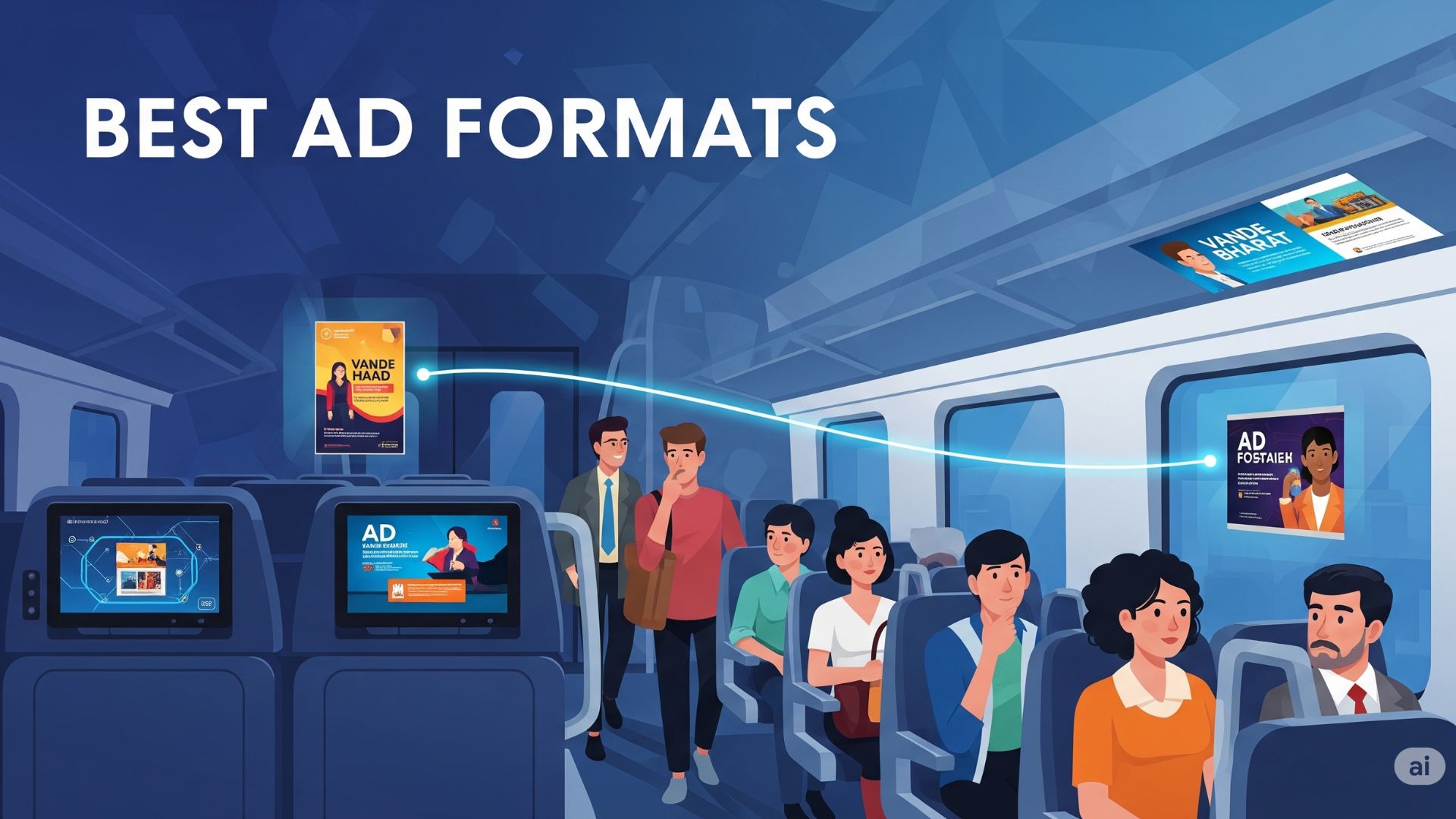
- Description: LED video walls and digital panels placed in coaches showing video ads, animations, and dynamic content.
- Benefits: Captive and engaged audience during travel; allows time-sensitive, interactive, and changing ads.
- Best For: Digital-first brands, tech companies, and campaigns requiring high engagement and creativity.
c. Seatback and Tray Table Ads
- Description: Static or digital ads placed where passengers can easily see them while seated.
- Benefits: Personalized, close-range exposure; ideal for concise messaging and offers.
- Best For: Local businesses, promo-driven campaigns, and direct calls-to-action.
d. Audio Advertisements
- Description: Sponsored messages or announcements played during travel breaks or stops.
- Benefits: Engages auditory senses, complements visual ads, effective for service updates or brand storytelling.
- Best For: Brands focusing on message reinforcement and auditory branding (e.g., telecom, audio streaming).
e. Corridor and Vestibule Panels
- Description: Static posters or digital ads in train corridors and vestibule areas frequently used by passengers.
- Benefits: Captures attention during movement, frequent views especially during boarding or disembarking.
- Best For: Campaigns aimed at reinforcing brand recall throughout the journey.
f. Interactive Kiosks and QR Code Campaigns
- Description: Touchscreen kiosks or printed QR codes linked to brand websites, apps, or contests.
- Benefits: Drives active engagement and data capture; tracks campaign performance digitally.
- Best For: Brands wanting direct engagement and lead generation from on-the-go passengers.
3. How to Combine Formats for Maximum Impact
- A mixed-format approach synergizes brand recognition and engagement. For example:
- Use exterior wraps for high-visibility brand presence.
- Engage passengers inside with digital screens and seatback ads for detailed messaging.
- Reinforce branding through audio ads and corridor panels during movement.
- Boost interaction with QR codes or interactive kiosks linking offline-to-online engagement.
- Tailor format combinations based on campaign goals, budget, and desired passenger touchpoints.
4. Considerations for Format Selection
- Audience Behavior: Match ad formats to passenger habits (e.g., digital screens for tech-savvy millennials, audio for commuters during relaxation periods).
- Route Length: Longer journeys justify richer, multimedia ads; shorter trips may favor quick-impact static ads.
- Budget and Scale: Premium formats like full coach wraps cost more but offer broader reach; interior static panels offer budget-friendly options.
- Creative Flexibility: Digital formats allow rapid updates and localization, static ads require longer lead times but provide consistent presence.
5. Emerging Trends in Vande Bharat Advertising Formats
- Growing adoption of programmatic digital ads enabling real-time content adjustments based on route and time.
- Increased use of augmented reality (AR) and virtual reality (VR) tie-ins accessed through mobile integrations and onboard kiosks.
- Integration with passenger mobile devices and onboard Wi-Fi for personalized ad delivery and interactive experiences.
- Expansion of sustainability-themed ads aligned with the eco-friendly messaging of modern rail.
Conclusion
Selecting the right advertising formats is crucial to unlocking the full potential of the Vande Bharat Express as a transit media platform. Brands that leverage a combination of high-impact exterior branding, dynamic interior digital displays, personal seatback messaging, and interactive engagement tools stand to maximize reach, relevance, and return on investment. Understanding passenger behavior and campaign goals will guide advertisers in making informed format choices that resonate with this captive, premium train audience.
Ready to design a format mix that captivates the Vande Bharat commuter? Partner with transit media experts to create innovative, multi-sensory campaigns that ride the rails to success.
Frequently Asked Questions (FAQs)
Q1: Which format gets the highest passenger attention on Vande Bharat trains?
Digital screens and exterior coach wraps typically command the highest visual engagement.
Q2: Can small businesses use digital formats affordably?
Yes, many vendors offer short-duration or low-frequency digital slots suitable for smaller budgets.
Q3: Are audio ads disruptive to passengers?
Audio ads are carefully scheduled to avoid disruption and are often welcomed as informative or entertaining content.
Q4: How do interactive kiosks enhance advertising effectiveness?
They enable direct passenger participation, feedback, and data collection, making campaigns measurable and engaging.