Introduction
With the rise of the Vande Bharat Express as India’s flagship semi-high-speed train network, advertising onboard these trains has become a highly sought-after marketing channel. This guide provides advertisers with a comprehensive overview of how to plan, book, and execute successful ad campaigns on Vande Bharat trains. From formats and pricing to audience insights and creative tips, discover everything you need to maximize your brand’s impact on this premium transit platform.
1. Why Choose Vande Bharat Trains for Advertising?
- Premium Target Audience: Vande Bharat’s passengers are predominantly business travelers, professionals, and tourists with disposable income.
- High Passenger Volume: Consistent ridership across key commercial routes ensures frequent and wide-reaching exposure.
- Longer Engagement Time: Journey durations of 2 to 8 hours allow brands to capture and hold commuter attention effectively.
- State-of-the-Art Facilities: Digital screens, modern interiors, and onboard connectivity offer dynamic and interactive advertising opportunities.
- Brand Association: Aligning with India’s modern rail flagship boosts brand prestige and recall.
2. Advertising Formats on Vande Bharat Trains
Exterior Advertisements
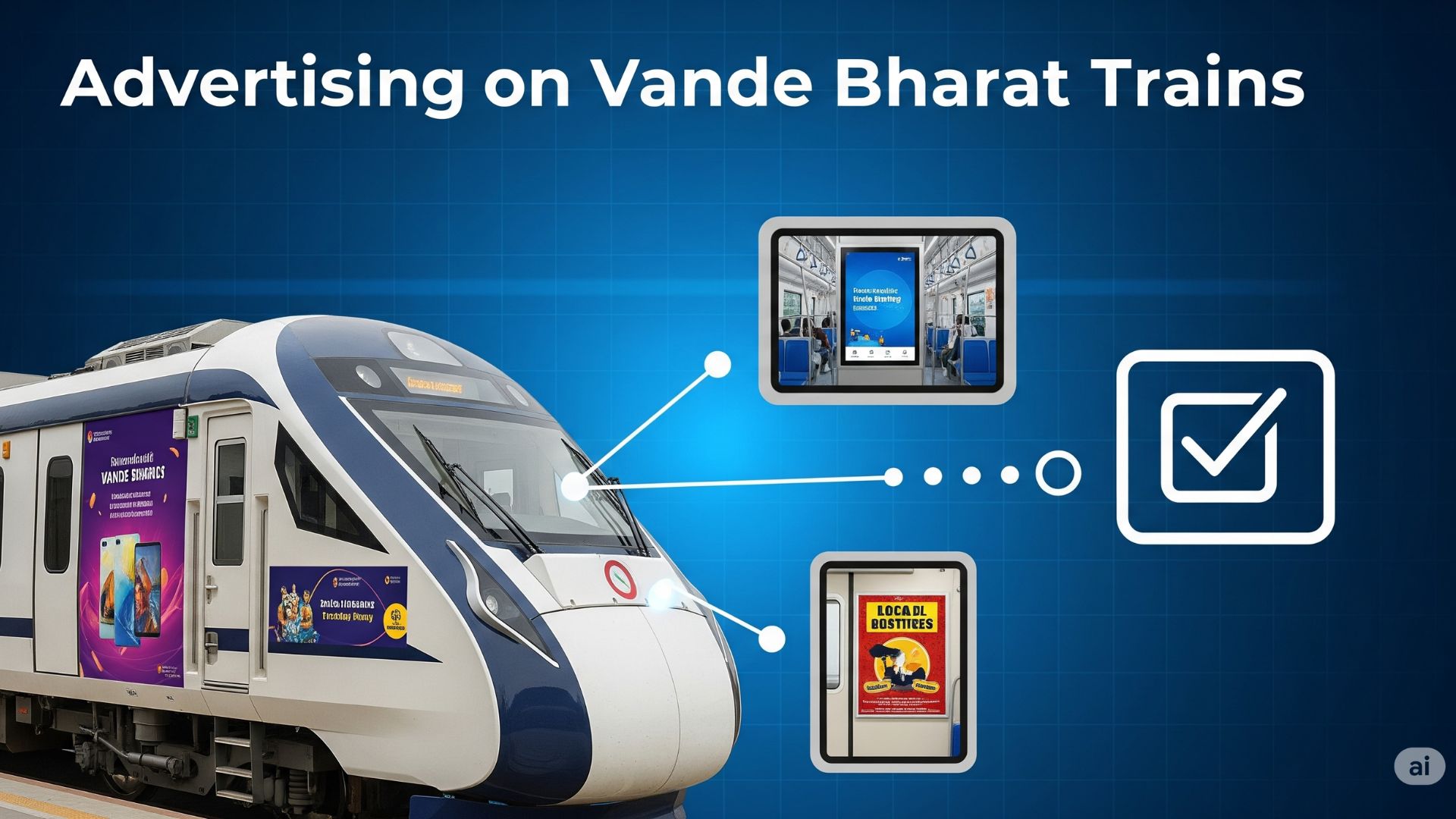
- Full or Partial Coach Wraps: Large, vibrant visuals covering the train’s exterior for high-impact visibility at stations and en route.
- Door and Vestibule Panels: Strategic placements that catch passenger attention entering and exiting coaches.
Interior Advertisements
- Digital Screens: LED video walls and monitors placed in coaches, showcasing dynamic video ads and animations.
- Seatback and Tray Table Branding: Personalized messaging within passengers’ immediate visual field.
- Ceiling Hangers and Corridor Panels: Supplementary static or digital placements enhancing the overall experience.
Audio Advertising
- Sponsored announcements or brand messages broadcasted during the journey to engage passengers audibly.
Interactive and Mobile Integration
- QR codes, NFC tags, and on-board Wi-Fi partnerships enable commuters to interact with ads or access exclusive offers.
3. Booking Process for Vande Bharat Train Advertising
- Identify Campaign Objectives: Define your target audience, message, formats, locations, and budget.
- Contact Authorized Vendors: Work with official transit media agencies managing Vande Bharat ad inventories.
- Select Routes and Formats: Choose specific train routes, interior/exterior formats, and duration based on campaign goals.
- Submit Creative Assets: Ensure ad content complies with guidelines and technical requirements.
- Schedule and Execute: Coordinate timing for production, delivery, installation, and campaign launch.
- Monitor Campaign: Use available analytics and feedback for real-time optimization and post-campaign evaluation.
4. Pricing Overview and Budgeting Tips
- Ad costs vary depending on the format (exterior wrap vs digital screen), duration, and route.
- Full coach wraps command premium rates due to high visibility.
- Interior formats like seatbacks and digital screens are cost-effective for targeted messaging.
- Bundling multiple formats or routes can yield discounts and greater campaign synergy.
- Advertisers should factor in creative production, installation, and agency fees alongside media costs.
5. Audience Insights and Targeting Opportunities
- Vande Bharat passengers are mostly in the 25-50 age bracket with medium to high disposable income.
- Routes connect major metros and growing tier II cities, allowing for geographic targeting flexibility.
- Business travelers and tech-savvy millennials dominate, ideal for technology, finance, FMCG, and lifestyle brands.
- Data-driven programmatic buying for digital ad inventory is emerging, enabling precise targeting by time, location, and audience segment.
6. Creative Best Practices for Vande Bharat Advertising
- Use high-contrast, vibrant visuals that stand out inside and outside the train environment.
- Craft concise messages easy to absorb in short glances or longer journey times.
- Leverage motion and sound in digital ads to engage multiple senses.
- Incorporate QR codes or interactive elements to drive multi-channel consumer engagement.
- Adapt creatives to the journey context: e.g., promote refreshments for longer trips or tech gadgets for business travelers.
7. Measuring Success and ROI
- Track interaction metrics such as QR code scans, app downloads, or website visits linked to campaigns.
- Use commuter surveys and brand recall studies for qualitative feedback.
- Analyze footfall data and passenger demographics to compare campaign impressions.
- Leverage social media buzz and user-generated content triggered by onboard ads.
- Collaborate with media agencies for comprehensive campaign reporting.
Conclusion
Advertising on Vande Bharat Trains represents a unique blend of cutting-edge technology, premium audience access, and dynamic creative possibilities. Marketers who understand the nuances of this platform—from audience profile and ad formats to booking logistics and creative execution—can successfully elevate their brand presence in one of India’s most prestigious transit environments.
Ready to make your mark on the rails with Vande Bharat advertising? Partner with experienced transit media professionals to design, book, and activate campaigns that resonate with millions of discerning commuters.
Frequently Asked Questions (FAQs)
Q1: What types of brands benefit most from advertising on Vande Bharat trains?
Brands in technology, finance, FMCG, luxury, and lifestyle sectors targeting affluent and business travelers gain significant advantages.
Q2: How far in advance should I book Vande Bharat advertising slots?
It is advisable to book at least 4-6 weeks ahead to secure preferred routes and ad formats.
Q3: Are there restrictions on the content allowed in Vande Bharat ads?
Yes, all creatives must comply with Indian Railways advertising guidelines and adhere to cultural and legal standards.
Q4: Can I run multi-route campaigns across different Vande Bharat trains simultaneously?
Yes, campaigns can be scaled across multiple routes to maximize reach and frequency.