
Introduction
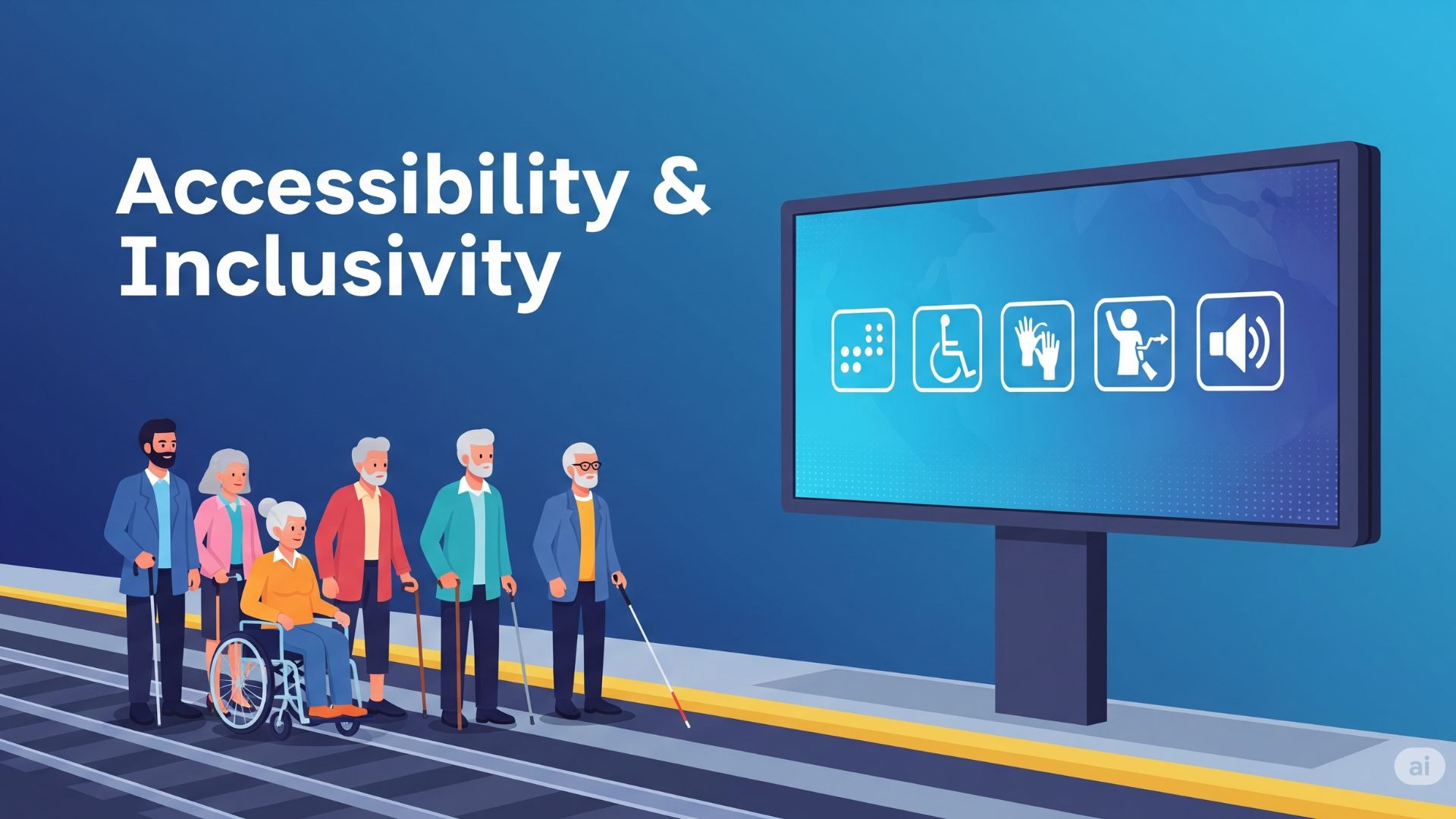
Railway stations are melting pots of diverse populations, including people of different ages, abilities, languages, and cultural backgrounds. Effective advertising in such a mixed environment requires a firm commitment to accessibility and inclusivity. Ads designed with these principles not only comply with legal standards but also foster meaningful connections with all commuters, enhancing brand reputation and maximizing impact.
This article discusses why accessibility and inclusivity matter in railway station advertising, explores practical strategies to implement them, and reveals how brands can benefit from embracing diversity in their campaigns.
1. Why Accessibility and Inclusivity Matter in Railway Station Advertising
- Reaching a Broader Audience: Inclusive ads can engage seniors, people with disabilities, non-native speakers, and culturally diverse commuters.
- Legal Compliance: Many countries mandate accessibility standards in public spaces, including advertising.
- Enhancing Brand Image: Brands perceived as socially responsible and inclusive earn trust and loyalty.
- Improving Commuter Experience: Accessible ads improve clarity and usability for all, including those with impairments.
- Promoting Social Equity: Inclusive advertising supports the visibility and dignity of marginalized groups.
2. Key Elements of Accessible Railway Station Advertising
a. Visual Accessibility
- Use high contrast colors for readability (e.g., dark text on light backgrounds).
- Select large, legible fonts free from decorative elements.
- Avoid cluttered layouts; maintain simplicity and focus on key messages.
- Ensure signage and posters are well-lit and visible from various distances and angles.
b. Cognitive Accessibility
- Keep language clear and simple; avoid jargon, slang, or complicated expressions.
- Use universal icons and pictograms alongside text to aid understanding.
- Limit the amount of information to prevent cognitive overload.
c. Audio and Multisensory Options
- For digital screens or audio-enabled ads, provide captioning, subtitles, or transcripts.
- Consider assistive audio messages or touch-interactive kiosks for visually impaired commuters.
- Use multisensory cues (e.g., tactile elements) where possible.
d. Multilingual Inclusivity
- Include translations of key messages in predominant local languages.
- Use iconography and visuals that transcend language barriers.
- For digital or interactive ads, offer language selection options.
e. Physical Accessibility
- Place ads at heights and locations accessible to wheelchair users and people of varying heights.
- Avoid placing ads where physical obstacles or crowds may block visibility or interaction.
- Ensure interactive installations comply with accessibility standards for reach and usability.
3. Integrating Inclusivity in Creative Messaging
- Feature diverse models and scenarios that reflect different ages, abilities, ethnicities, and lifestyles.
- Avoid stereotypes; portray inclusive, positive, and empowering representations.
- Use narratives that resonate across cultural or demographic groups, focusing on shared human experiences.
- Highlight accessibility features or services if relevant to your brand or offering.
4. Technologies Supporting Accessible and Inclusive Advertising
- Screen readers and voice assistants integrated into digital kiosks.
- Dynamic font resizing and contrast adjustment options on digital ads.
- Multilingual, AI-powered translation for real-time content updates.
- Interactive touchscreens designed with universal design principles.
- Beacon technology can aid visually or hearing-impaired commuters with location-based info.
5. Benefits of Accessibility and Inclusivity for Advertisers
- Expanded Market Reach: Engage underserved and often overlooked commuter segments.
- Positive Brand Differentiation: Demonstrate leadership in social responsibility.
- Increased Engagement and Recall: Clear and relevant ads resonate better with all audiences.
- Compliance and Risk Reduction: Avoid legal issues related to accessibility violations.
- Long-Term Loyalty: Inclusive campaigns build lasting emotional connections.
6. Challenges and Solutions
| Challenge | Solution |
| Balancing visual appeal with accessibility | Collaborate with accessibility experts during design phase. |
| Ensuring accurate multilingual translations | Use professional translators and AI-assisted tools. |
| Physical constraints in station spaces | Conduct site surveys to select optimal ad placements. |
| Digital content complexity vs cognitive load | Simplify interfaces and provide user customization options. |
7. Case Studies of Inclusive Railway Station Advertising
- A national telecom company introduced digital kiosks with screen reader functionality and multilingual support in busy stations, boosting service sign-ups by 18%.
- A public health campaign in a major metro included large-font posters with braille elements and audio announcements, improving message reach among visually impaired commuters.
- A fashion retailer’s campaign showcased diverse models reflecting the local population, positively impacting brand perception and social media engagement.
Conclusion
Advertising that prioritizes accessibility and inclusivity is not just ethically right but commercially smart. Railway stations, with their diverse, multicultural, and multigenerational audiences, demand communication that everyone can access, understand, and relate to. By integrating accessible design principles, inclusive messaging, and supportive technology, brands can create equitable, effective, and memorable campaigns that resonate widely.
Commit to inclusivity in your railway station advertising to strengthen brand equity, comply with regulations, and most importantly, connect authentically with every commuter.
Are you ready to make your railway advertising accessible and inclusive? Partner with creative experts and transit media agencies specializing in inclusive design to lead the way in socially responsible advertising.
Frequently Asked Questions (FAQs)
Q1: What are the basic legal requirements for accessibility in railway advertising?
Requirements vary by region but typically include visual clarity, font size, contrast, physical access, and provision for persons with disabilities under acts like the ADA, Equality Act, or similar.
Q2: How can I test if my ads are accessible?
Conduct usability testing with diverse user groups, including people with disabilities, and employ accessibility evaluation tools and standards (e.g., WCAG).
Q3: Does inclusivity limit creative freedom?
Not at all. Inclusive design encourages creativity within clear guidelines, resulting in more innovative and effective ads.
Q4: How important is multilingual advertising in railway stations?
Highly important in multicultural cities and regions with significant non-native commuters to ensure message clarity and broader reach.