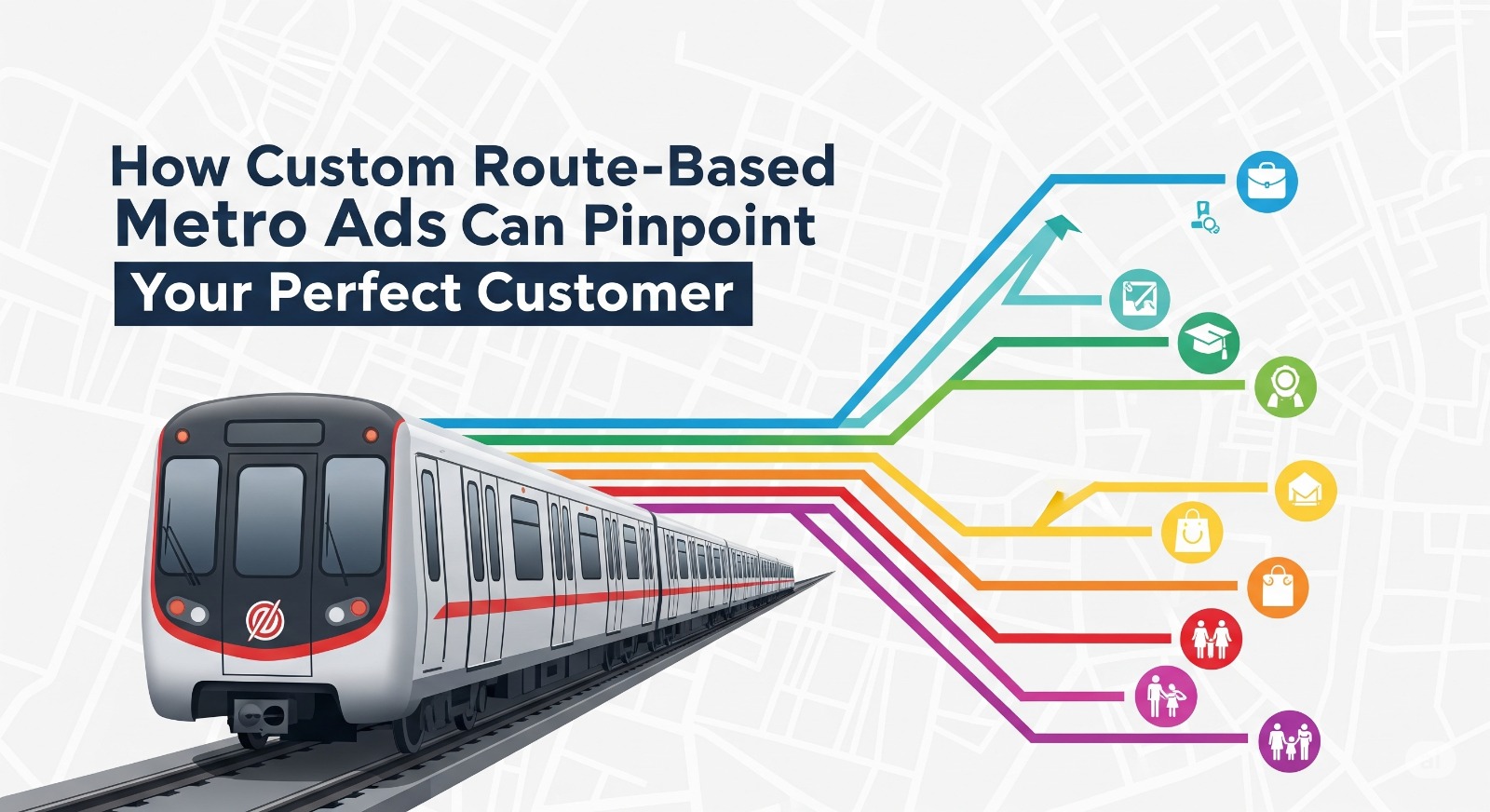
In today’s fast-paced urban markets, generic advertising is no longer enough to cut through the noise. As metro rail advertising gains traction as one of the most effective ways to reach millions of daily commuters, brands are increasingly turning to custom route-based Metro Ads campaigns. This targeted approach allows advertisers to pinpoint specific neighborhoods, demographic groups, and commuter segments—maximizing impact and return on investment.
In this article, we explore how custom route-based metro ad campaigns work, why they are powerful, and practical tips for designing your own successful campaign in 2025.
What Is Custom Route-Based Metro Advertising?
Metro rail networks span diverse neighborhoods and regions, each serving unique passenger profiles. Custom route-based advertising means selecting specific metro lines, stations, or train routes where your target audience is most likely to be present. Instead of blanket advertising across an entire metro system, you tailor your campaign to hyperlocal geographies and commuter characteristics.
This precision targeting helps brands enhance relevance and engagement, leading to better brand recall and conversion rates.
Why Choose Route-Based Campaigns? Key Advantages
- Highly Focused Reach: Influence consumers where they live, work, or commute daily. For example, a luxury brand might target metro lines passing through affluent business districts.
- Cost Efficiency: Avoid spending on irrelevant locations; allocate advertising budgets to high-potential zones.
- Greater Message Relevance: Craft creative Metro ads that resonate with the cultural, social, or economic characteristics of the route’s passenger profile.
- Enhanced Measurement and Reporting: Route selection allows clearer attribution of campaign impact based on known commuter demographics.
Who Benefits Most from Route-Based Metro Ads?
- Retail Brands: Target specific shopping corridors or markets.
- Educational Institutions: Reach students by advertising on lines serving university campuses.
- Healthcare Providers: Focus on routes with high footfall near hospitals and clinics.
- Tech Companies: Target metro stations near IT hubs and business parks.
- Local Services: Promote hyperlocal offers effectively.
How to Plan a Successful Route-Based Metro Advertising Campaign
- Analyze Your Target Audience:
Understand who your customers are, where they commute from, and their daily travel patterns. Use commuter data and metro ridership analytics from transit authorities or advertising agencies.
- Select Appropriate Metro Lines and Stations:
Choose routes that provide maximum exposure to your targeted segments. For example, if targeting young professionals, advertise on metro lines servicing central business districts.
- Choose the Most Impactful Ad Formats:
Select from train wraps, interior coach panels, station wall wraps, or digital displays on your chosen routes. Consider creative formats that capture attention.
- Tailor Messaging to the Route’s Demographic:
Use local cultural references, language, or offers specific to the passengers of that route for better engagement.
- Work with Experienced Metro Advertising Agencies:
Professional agencies can provide commuter insights, handle permissions, and develop creative campaigns optimized for specific routes.
- Integrate Digital Campaigns Strategically:
Use QR codes, NFC tags, or hashtags in your ads to connect offline metro ads with online marketing, boosting engagement.
Real-World Success Stories
- A premium fitness brand launched a route-based campaign targeting metro lines linked to corporate hubs, resulting in a 35% increase in gym memberships within 3 months.
- A regional educational institute focused advertising on routes servicing student-heavy stations, achieving a record surge in applications during admission season.
- A local food delivery service concentrated ads on residential area metro lines, doubling their order volume in the targeted zones.
Measuring Success of Route-Based Metro Ads
Track KPIs such as:
- Changes in foot traffic near target outlets or service areas.
- Website visits or app downloads linked to QR codes embedded in ads.
- Increase in brand recall or survey-based brand awareness among commuters.
- Sales lift within targeted geographies.
Final Thoughts
Custom route-based Metro Ads offers brands an unparalleled opportunity to reach the right audience, in the right place, at the right time. By leveraging detailed demographic insights, precise route targeting, and creative ad formats, brands can maximize the impact of their metro ad spend in 2025.