Introduction
Railway stations are dynamic advertising spaces where brands compete to capture the attention of millions of daily commuters. Among the most popular advertising formats are digital screens and traditional posters (static billboards and hoardings). Both formats offer unique advantages and challenges that impact campaign effectiveness, audience engagement, and return on investment (ROI).
This article presents a detailed impact analysis comparing digital screens and traditional posters in railway stations, helping marketers make informed decisions on selecting the right format for their advertising goals.
1. Overview of Digital Screens and Traditional Posters
Digital Screens
These are LED or LCD displays capable of showing video, animation, and rotating ads. They often feature real-time content updates and interactive capabilities in some cases.
Traditional Posters
Static advertising formats include printed billboards, hoardings, and posters placed strategically at platforms, concourses, and entrances. Content remains fixed for the campaign duration.
2. Visibility and Engagement
| Aspect | Digital Screens | Traditional Posters |
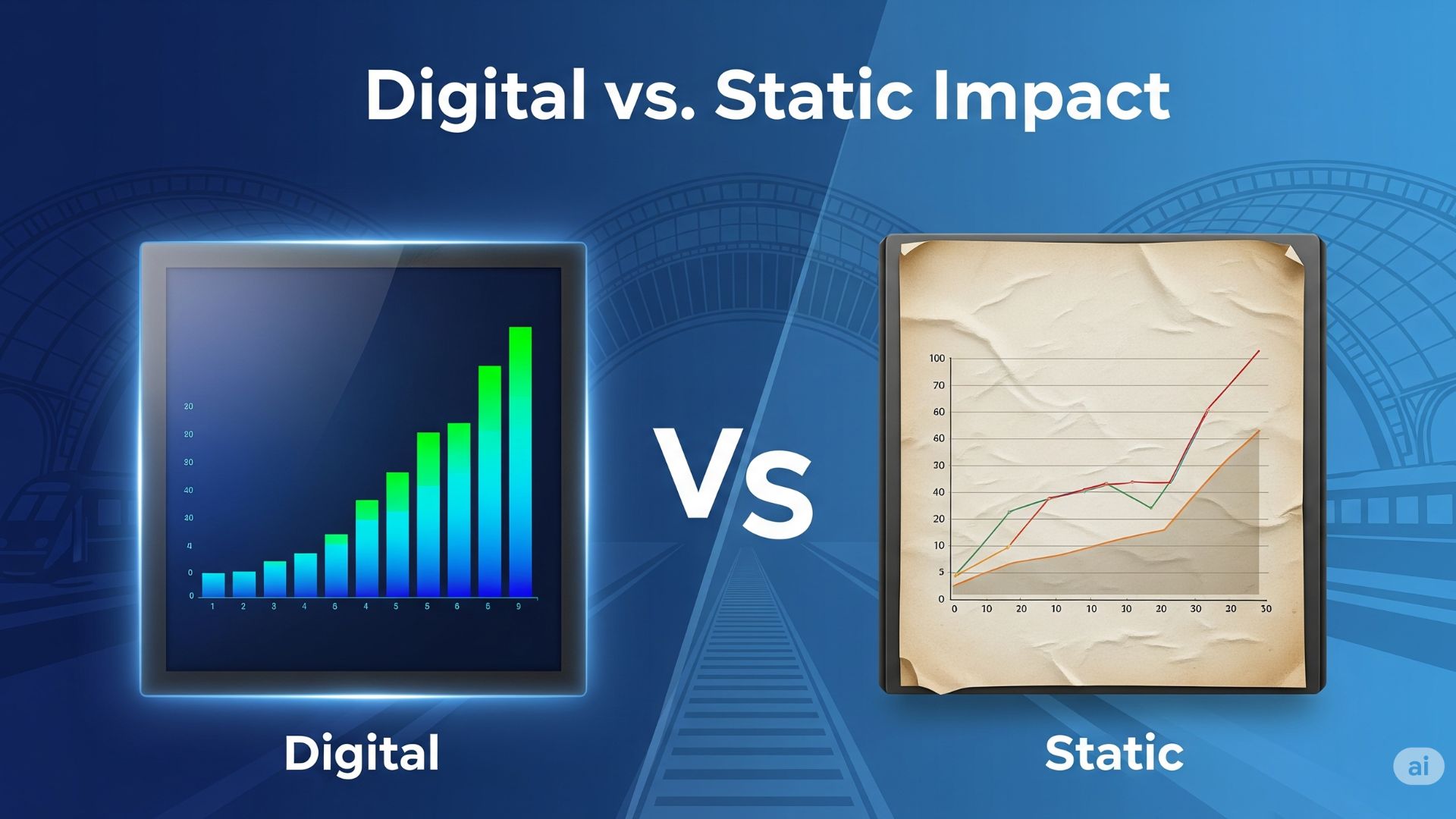
| Visual Impact | High – Dynamic motion and vibrant colors attract attention and hold interest longer. | Moderate – Large format and bright colors catch the eye but can be ignored over time. |
| Engagement Level | Higher – Can incorporate video, animation, and interaction, leading to increased attention. | Lower – Passive viewing with no interactive elements reduces engagement potential. |
| Flexibility | Very flexible – Content can rotate, update, and be customized for time-of-day or audience. | Static – Requires reprinting and manual replacement to change content. |
3. Audience Reach and Frequency
- Digital Screens: Usually placed at high dwell-time locations like concourses and waiting areas, often rotate multiple ads, allowing messages to reach different audience segments throughout the day.
- Traditional Posters: Positioned in fixed locations such as platforms and entry points, ensuring consistent exposure but limited to a single message per location.
4. Cost Considerations
| Cost Element | Digital Screens | Traditional Posters |
| Production | High – Content creation for video and animation requires more resources. | Low – Printing and installation are relatively inexpensive. |
| Media Space Leasing | Higher – Premium for dynamic and high-traffic digital placements. | Lower – Static ad spaces are generally less costly. |
| Maintenance | Ongoing – Requires power, software updates, and technical upkeep. | Minimal – Usually only replacement when damaged or campaign ends. |
| Flexibility Impact on Cost | Lower overall if multiple campaigns run due to content update ease. | Higher if frequent changes needed (due to reprinting fees). |
5. Measurability and Reporting
- Digital Screens: Often equipped with sensors, touch interfaces, and real-time analytics, enabling detailed tracking of impressions, interactions, and engagement metrics.
- Traditional Posters: Measurement is indirect, relying on footfall data, surveys, and sales lift analysis, providing less precise performance insights.
6. Impact on Brand Recall and Conversion
- Studies show that digital screens tend to produce higher short-term recall due to motion, color intensity, and novelty.
- Traditional posters contribute to sustained brand presence through repetitive exposure, especially in commuter-heavy zones.
7. Environmental and Operational Considerations
- Energy Usage: Digital screens consume electricity, raising energy and sustainability concerns, whereas posters have a lower environmental footprint.
- Installation Time: Digital screens require complex installation and technical setup compared to quick poster placement.
- Durability: Posters are susceptible to wear and vandalism, while digital screens provide protected, consistent display quality.
8. Which Format Suits Which Campaign?
| Campaign Objective | Digital Screens | Traditional Posters |
| Dynamic Messaging & Promotions | Ideal for time-sensitive offers, events, or multi-message campaigns | Not suitable due to static nature |
| Brand Awareness & Long-Term Recall | Effective for high engagement and innovative brand storytelling | Great for broad, repeated exposure |
| Budget Sensitivity | Higher budgets required, better ROI with scale and duration | Suitable for smaller budgets or niche campaigns |
| Technology Integration | Supports interactive and multichannel campaigns | Limited to visual static communication |
9. Case Study Highlights
- A technology brand’s digital screen campaign in London railway stations saw a 35% higher engagement and double the social media interactions compared to their previous static poster campaigns.
- A FMCG company’s traditional poster campaign in Mumbai local stations maintained a steady brand recall uplift of 20% over six months, demonstrating persistent visibility benefits.
Conclusion
Both digital screens and traditional posters play vital roles in railway station advertising. Digital screens excel with dynamic content, interactivity, and measurable engagement, making them ideal for brands seeking innovation and high-impact campaigns. Traditional posters offer cost-effective, reliable exposure suited to long-term branding and broad reach.
Selecting the right format depends on your campaign goals, budget, and desired audience interaction. Often, a hybrid approach combining digital and static ads can leverage the strengths of both formats, creating a well-rounded, impactful advertising strategy.
Frequently Asked Questions (FAQs)
Q1: Can digital screens completely replace traditional posters in railway stations?
Not yet; many stations and campaigns still rely heavily on static formats due to cost efficiency and infrastructure limitations.
Q2: Are digital screen ads more memorable than static posters?
Generally yes, due to motion and interactivity, but consistent placement of posters also builds lasting brand recall.
Q3: How quickly can digital content be updated compared to posters?
Digital content can be updated within minutes remotely, while posters require physical replacement.
Q4: Do digital screens attract all commuter demographics equally?
Digital ads often appeal more to younger, tech-savvy commuters but can be designed for broad demographics