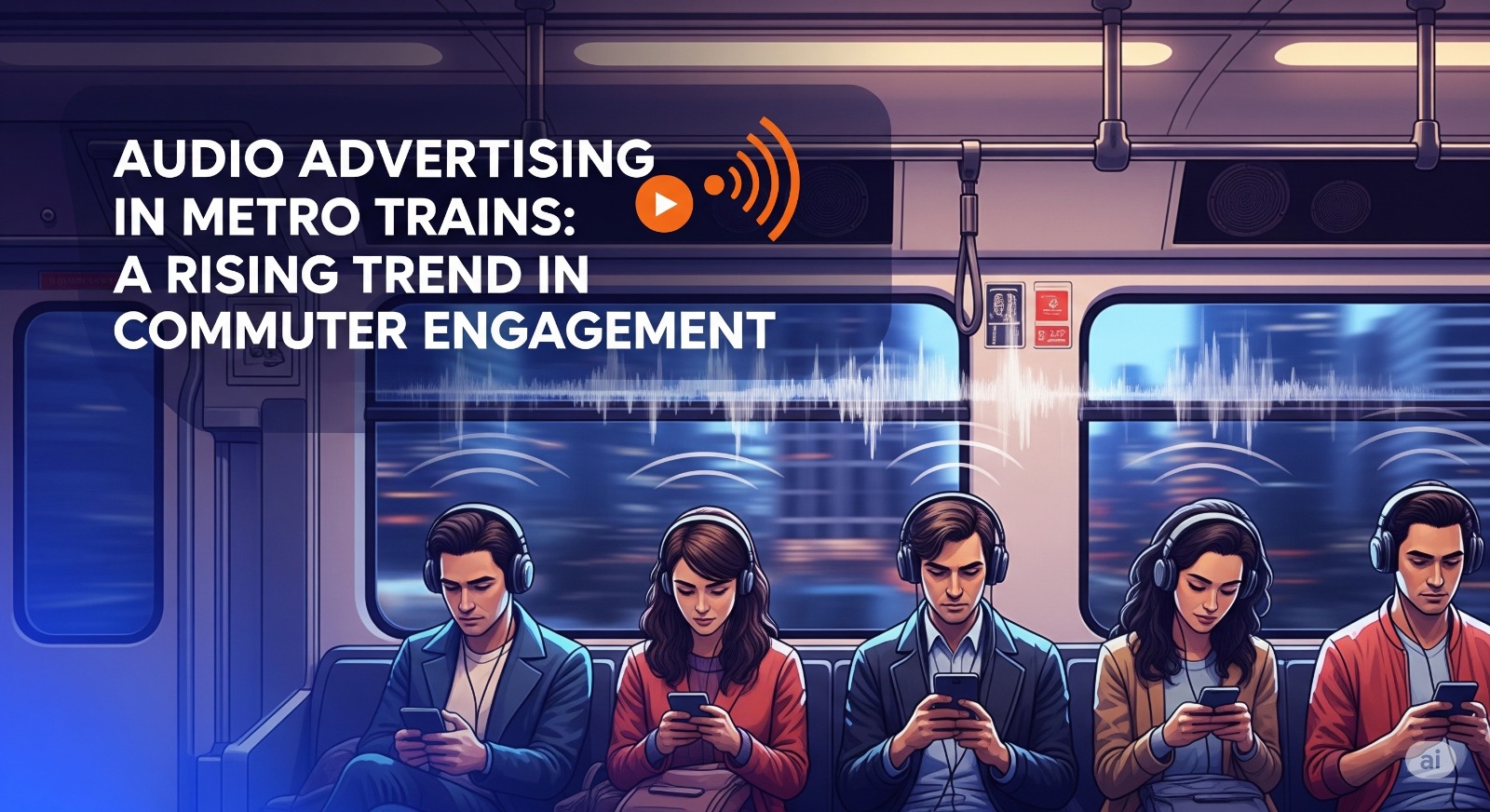
Metro rail advertising is evolving rapidly, and one of the most effective yet often underutilized formats gaining traction in 2025 is audio advertising inside metro trains. As millions of daily commuters spend time traveling, audio ads provide a unique opportunity to directly engage captive audiences in a way that complements visual campaigns. This article explores why audio advertising in metro trains is becoming a preferred choice for brands, how it works, best practices, and what marketers need to know to leverage this medium effectively.
Why Audio Advertising in Metro Trains Is Growing Fast
- Captive Audience with Minimal Distractions: Commuters spend significant time inside metro coaches, often with limited entertainment options, making them highly receptive to audio messages.
- High Frequency and Repetition: Audio ads can be played multiple times during trips, reinforcing brand recall and message retention.
- Cost-Effective Compared to Other Formats: While full train wraps or station billboards command high budgets, audio advertisements offer an affordable way to achieve wide reach across multiple metro lines.
- Supports Multi-Sensory Brand Experience: When combined with visual ads, audio advertising enhances overall engagement by appealing to both hearing and sight senses, making the messaging more memorable.
Common Formats of Metro Audio Advertising
- Pre-Recorded Announcements: Sponsored messages played before or after regular station announcements.
- Jingles and Brand Songs: Catchy tunes or slogans that create emotional connections.
- Integrated Audio Campaigns: Audio ads synchronized with digital screens or train visuals for cohesive storytelling.
- Event-Driven Messaging: Special announcements tied to brand campaigns, festivals, or city events for timely relevance.
How to Plan and Implement an Effective Metro Audio Campaign
1. Understand Your Audience and Timing
Identify which metro lines and peak travel times best match your target demographic. For example, office commuters during morning and evening rush hours or students during midday.
2. Craft Clear, Concise, and Engaging Scripts
Keep messages brief but impactful (typically 15-30 seconds). Use catchy phrases, a friendly tone, and a strong call-to-action. Avoid complex language to ensure easy comprehension by diverse audiences.
3. Professional Audio Production
Invest in high-quality voiceover artists and sound engineers to deliver crisp, clear messages that stand out over ambient noise.
4. Coordinate with Metro Authorities
Obtain necessary permissions and adhere to guidelines about volume, frequency, and timing to avoid passenger discomfort or regulatory issues.
5. Monitor and Measure Campaign Performance
Use feedback loops and any available ridership data to evaluate reach and effectiveness. Adjust campaign elements if needed to optimize engagement.
Benefits of Audio Ads for Various Brands
- Retail and FMCG Brands: Promote offers or new product launches during daily commutes.
- Entertainment and Events: Announce concerts, movie releases, or local happenings.
- Educational Institutions and Online Courses: Target students with timely reminders or enrollment information.
- Health and Public Service Messages: Share awareness campaigns in a non-intrusive manner.
Challenges and Considerations
- Ambient noise inside trains can sometimes reduce clarity, so quality production is essential.
- Repeated audio ads may cause listener fatigue if not varied enough.
- Regulatory limits on volume and timing demand careful scheduling.
The Future of Metro Audio Advertising
With integration of smart technologies and AI, audio ads are expected to become more personalized and targeted. For instance, location-based audio targeting could deliver different messages depending on the area or time. Audio campaigns will also increasingly complement digital metro advertising, creating a seamless and immersive commuter experience.