Introduction
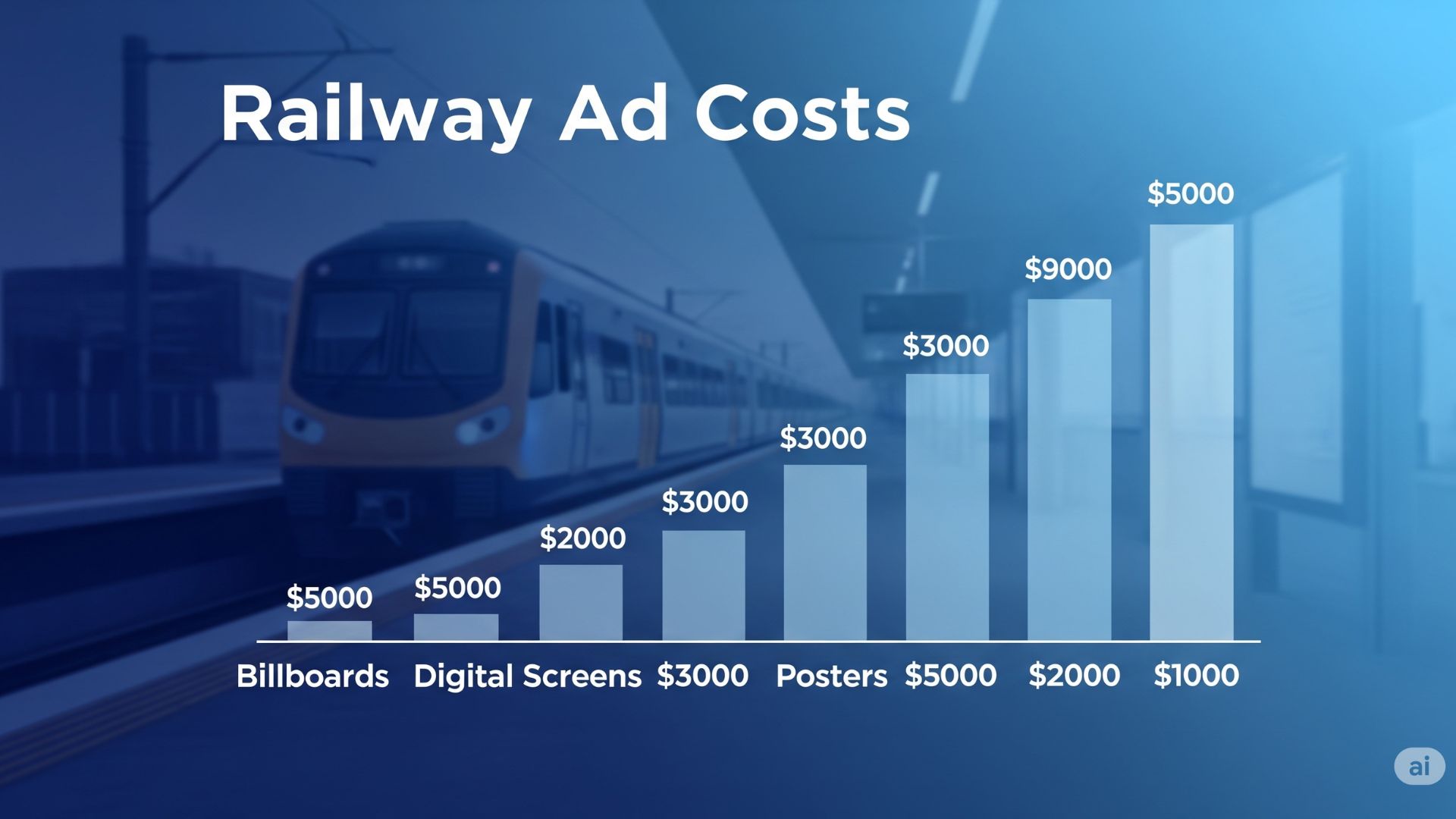
Understanding the costs involved in railway station advertising is crucial for brands aiming to maximize their marketing budgets and achieve impactful results. Railway station ads come in various formats—each with different pricing influenced by location, size, visibility, and technology. This article provides a detailed cost breakdown of popular railway station advertising formats, helping advertisers make informed decisions and optimize their spend.
1. Static Billboards and Hoardings
Description
Traditional printed ads displayed on platforms, concourses, entry points, and walls. These are fixed-size, large-format visuals that offer continuous brand exposure.
Cost Overview
- Range: ₹50,000 to ₹5,00,000 per month (varies by city, station, and size)
- Factors Influencing Cost: Location footfall, sheet size (4-sheet, 6-sheet, 12-sheet), and demand
- Ideal For: Brands looking for cost-effective, steady visibility without frequent updates
Notes
Static billboards have lower production costs but less flexibility. Longer-term bookings may come at discounted rates.
2. Digital Screens and LED Panels
Description
Dynamic digital displays capable of showing video, animations, and rotating ads. Often placed in high-traffic concourses and waiting areas.
Cost Overview
- Range: ₹2,00,000 to ₹10,00,000+ per month depending on screen size and location
- Factors Influencing Cost: Screen size, dayparting (time slots), and audience volume
- Ideal For: Brands wanting dynamic content, multiple creatives, and real-time campaigns
Notes
Higher upfront cost but allows for content flexibility and real-time updates. Digital ads also offer better audience measurement capabilities.
3. Train Wrap Advertising (Exterior)
Description
Full or partial wrapping of train exteriors with vibrant, engaging brand visuals.
Cost Overview
- Range: ₹5,00,000 to ₹50,00,000+ per campaign (usually multi-month contracts)
- Factors Influencing Cost: Number of train cars wrapped, train routes, and campaign duration
- Ideal For: Large brands aiming for high-impact, mobile advertising across the city or region
Notes
Expensive but visually dominating. Typically suited for big-budget campaigns and brand storytelling.
4. Train Interior Ads
Description
Ads placed inside train carriages, such as posters, panels, or digital displays targeting commuting passengers.
Cost Overview
- Range: ₹1,00,000 to ₹8,00,000 per month depending on carriage count and routes
- Factors Influencing Cost: Number of train cars, advertising format (static vs. digital), and train line popularity
- Ideal For: Repeated exposure to captive commuters and localized targeting
Notes
Effective for captive audience engagement with relatively moderate costs compared to exterior wraps.
5. Interactive Digital Kiosks
Description
Touchscreen kiosks located in concourses or waiting halls providing interactive advertising alongside passenger information.
Cost Overview
- Range: ₹3,00,000 to ₹12,00,000 per month based on kiosk location and program length
- Factors Influencing Cost: Location prominence, interaction data capture capabilities
- Ideal For: Brands aiming to engage tech-savvy commuters with experiential campaigns
Notes
Higher investment but offers interactivity and leads generation potential.
6. Sponsorships of Amenities
Description
Branding on station facilities like benches, escalators, ticket counters, or station announcements.
Cost Overview
- Range: ₹30,000 to ₹3,00,000+ per month depending on amenity and station size
- Factors Influencing Cost: Amenity visibility, exclusivity, and footfall
- Ideal For: Local or niche branding efforts with modest budgets
Notes
Unique advertising touchpoints that complement larger campaigns.
Factors Affecting Advertising Costs in Railway Stations
- Station Footfall: Higher passenger volumes command premium pricing. Stations in metro cities are costlier than smaller towns.
- Ad Location: Entry/exit points, platform centers, and concourses are prime spots with higher rates.
- Campaign Duration: Longer campaigns often attract discounts; short bursts can be more expensive per month.
- Creative Production Costs: Separate from media cost, include printing, digital content creation, and installation.
- Agency Fees: Partnering with advertising agencies may add to costs but offers expertise and better deals.
Tips to Optimize Your Railway Station Advertising Budget
- Mix and match formats to balance impact and cost (e.g., combine static billboards with digital screens).
- Target stations and times aligned with your audience demographics and campaign goals.
- Book early to negotiate better rates and secure premium locations.
- Leverage regional and tier-II city stations for cost-effective reach.
- Use digital formats to update messaging without additional printing costs.
Conclusion
Railway station advertising offers diverse formats that cater to various budgets and marketing objectives. Understanding the cost ranges and influencing factors helps advertisers plan effectively and maximize ROI. Whether opting for cost-effective static hoardings or high-impact train wraps, choosing the right mix ensures your brand gains maximum visibility and engagement in busy transit hubs.
Frequently Asked Questions (FAQs)
Q1: Is railway station advertising affordable for small businesses?
Yes, there are economical options like smaller billboards, amenity sponsorships, or advertising at smaller stations.
Q2: How does digital advertising compare cost-wise with static formats?
Digital formats are generally more expensive upfront but offer flexible content updates and better engagement.
Q3: Are costs negotiable for long-term campaigns?
Yes, many agencies and authorities offer discounts for extended bookings or bulk purchases.
Q4: How do costs vary between metro cities and smaller stations?
Metro city stations are more expensive due to higher footfall and demand; smaller stations provide budget-friendly options.