Introduction
Creating a memorable radio jingle can be a game-changer for any brand, but how exactly does a catchy jingle come to life? Understanding the radio jingle production process demystifies the steps involved and helps you collaborate effectively with creatives to produce audio that resonates with your audience.
In this guide, you’ll get a clear, step-by-step overview of the entire jingle creation journey — from initial concept to final delivery — so you can make informed decisions and get the best results for your brand.
Whether you’re commissioning a jingle for the first time or want to refine your production workflow, this article will guide you through the essentials of the process.
Table of Contents
- What Is a Radio Jingle?
- Overview of the Jingle Production Process
- Step 1: Concept Development and Creative Brief
- Step 2: Scriptwriting and Lyrics Crafting
- Step 3: Music Composition and Arrangement
- Step 4: Voice Talent Casting and Recording
- Step 5: Mixing and Mastering
- Step 6: Review, Revisions, and Final Delivery
- Tips for Successful Jingle Production
- Frequently Asked Questions (FAQs)
- Conclusion and Next Steps
1. What Is a Radio Jingle?
A radio jingle is a short, catchy audio piece combining music, lyrics, and voice elements designed to promote a brand, product, or service. It’s often memorable, building brand recognition through melody and repetition, perfect for embedding in listeners’ minds via radio advertisements.
2. Overview of the Jingle Production Process
Creating a radio jingle involves multiple creative and technical stages. Each step ensures the final jingle aligns with your brand story, connects emotionally with your audience, and meets quality standards fit for broadcast.
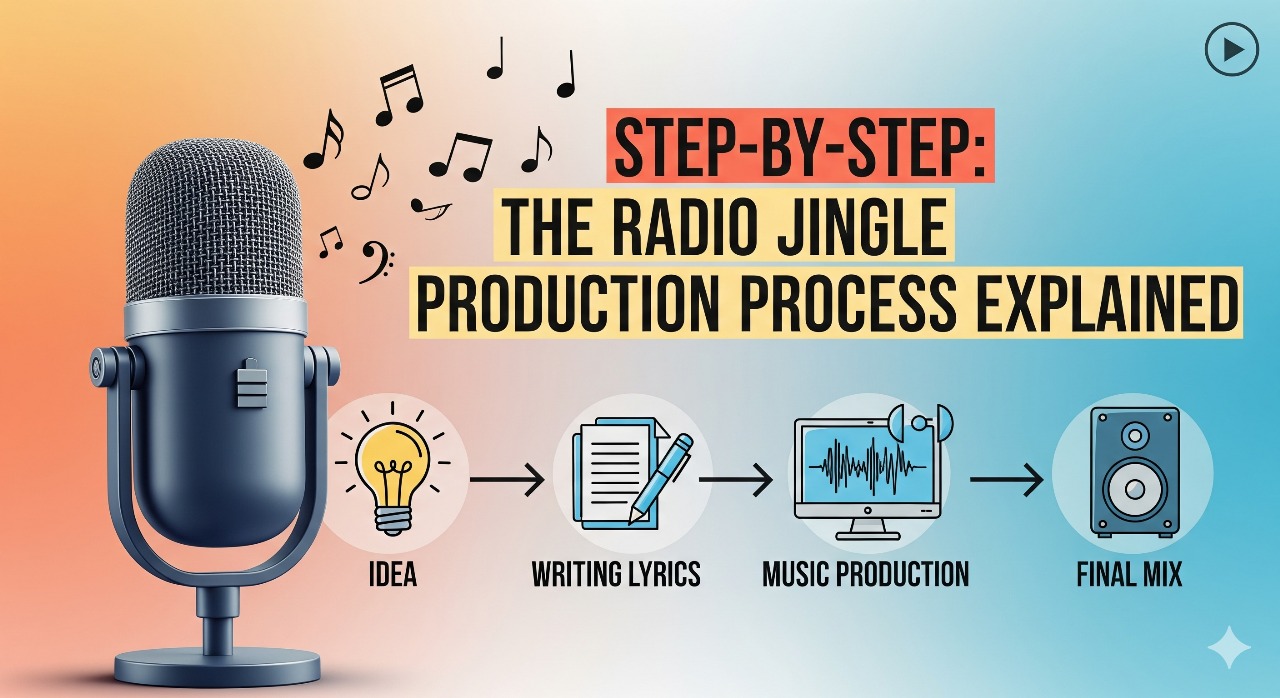
Here’s a quick synopsis of the production flow:
- Concept Development
- Scriptwriting & Lyric Writing
- Music Composition & Arrangement
- Voice Talent Casting & Recording
- Mixing & Mastering
- Review & Final Delivery
3. Step 1: Concept Development and Creative Brief
- Goal: Define the purpose, tone, and message of your jingle.
- How: Work with your marketing team or agency to draft a creative brief including target audience, brand values, campaign goals, and stylistic preferences (e.g., upbeat, nostalgic, fun).
- Tip: Provide examples of jingles you like and dislikes to guide the creative team.
4. Step 2: Scriptwriting and Lyrics Crafting
- Goal: Develop lyrics that effectively convey your brand’s key message in a catchy, easy-to-remember way.
- How: Professional copywriters or lyricists create several options focusing on brevity, rhyme, rhythm, and brand name inclusion.
- Consider: Clarity, simplicity, emotional impact, and how lyrics fit the melody’s rhythm.
5. Step 3: Music Composition and Arrangement
- Goal: Compose a melody that complements the lyrics and evokes the desired emotions.
- How: Composers or music producers craft an original tune or adapt a style matching your brand identity (pop, jazz, rock, etc.).
- Arrangement: Includes choosing instruments, tempo, harmony, and layering vocals or effects.
- Tip: Keep it simple to aid memorability but professional to ensure broadcast quality.
6. Step 4: Voice Talent Casting and Recording
- Goal: Select the right voice(s) to match your brand persona — friendly, authoritative, playful, etc.
- How: Agencies present voiceover demos or conduct auditions. Recording takes place in a professional studio, capturing clean, high-quality vocal tracks.
- Tip: Consider factors like tone, accent, and delivery style for your target listeners.
7. Step 5: Mixing and Mastering
- Mixing: Blend vocals, music, and effects to achieve a balanced, dynamic sound.
- Mastering: Final polish to optimize audio for radio broadcast standards, ensuring clarity and loudness compliance.
- Tip: Work with experienced sound engineers familiar with radio formats.
8. Step 6: Review, Revisions, and Final Delivery
- Review the first draft with stakeholders for feedback.
- Make necessary revisions on lyrics, music, or vocals.
- Approve the final version.
- Receive your jingle in broadcast-ready formats (WAV, MP3) along with licensing details and rights transfer.
9. Tips for Successful Jingle Production
- Start with a detailed creative brief.
- Prioritize simplicity and memorability.
- Maintain open communication with your production team.
- Test jingles with sample audiences if possible.
- Ensure your jingle aligns with your broader branding and marketing strategy.
10. Frequently Asked Questions (FAQs)
Q: How long does the entire jingle production process take?
A: Typically 2 to 4 weeks from concept to final delivery, depending on complexity and revisions.
Q: Can I reuse the jingle for other platforms beyond radio?
A: Absolutely. Jingles can be adapted for TV, online videos, podcasts, and social media.
Q: What is the difference between a jingle and a sonic logo?
A: A jingle usually includes lyrics and melody, while a sonic logo is a shorter musical signature or sound mark without words.
Q: How much does jingle production cost?
A: Costs vary widely based on production quality and talent, ranging from a few hundred to several thousand dollars.
11. Conclusion and Next Steps
Understanding the radio jingle production process empowers you to make smart, strategic choices and collaborate effectively with audio professionals. Following these clear stages ensures your jingle not only sounds great but also builds lasting brand recognition and emotional connection with listeners.
Ready to create your unforgettable radio jingle? Begin by drafting a creative brief and contact a reputable production company to bring your brand’s voice to life.
Meta Title: Radio Jingle Production Process: Step-by-Step Guide for 2025 Success
Meta Description: Discover the step-by-step radio jingle production process from concept to final delivery. Learn how to create memorable jingles that boost brand recall and engage listeners in 2025.