
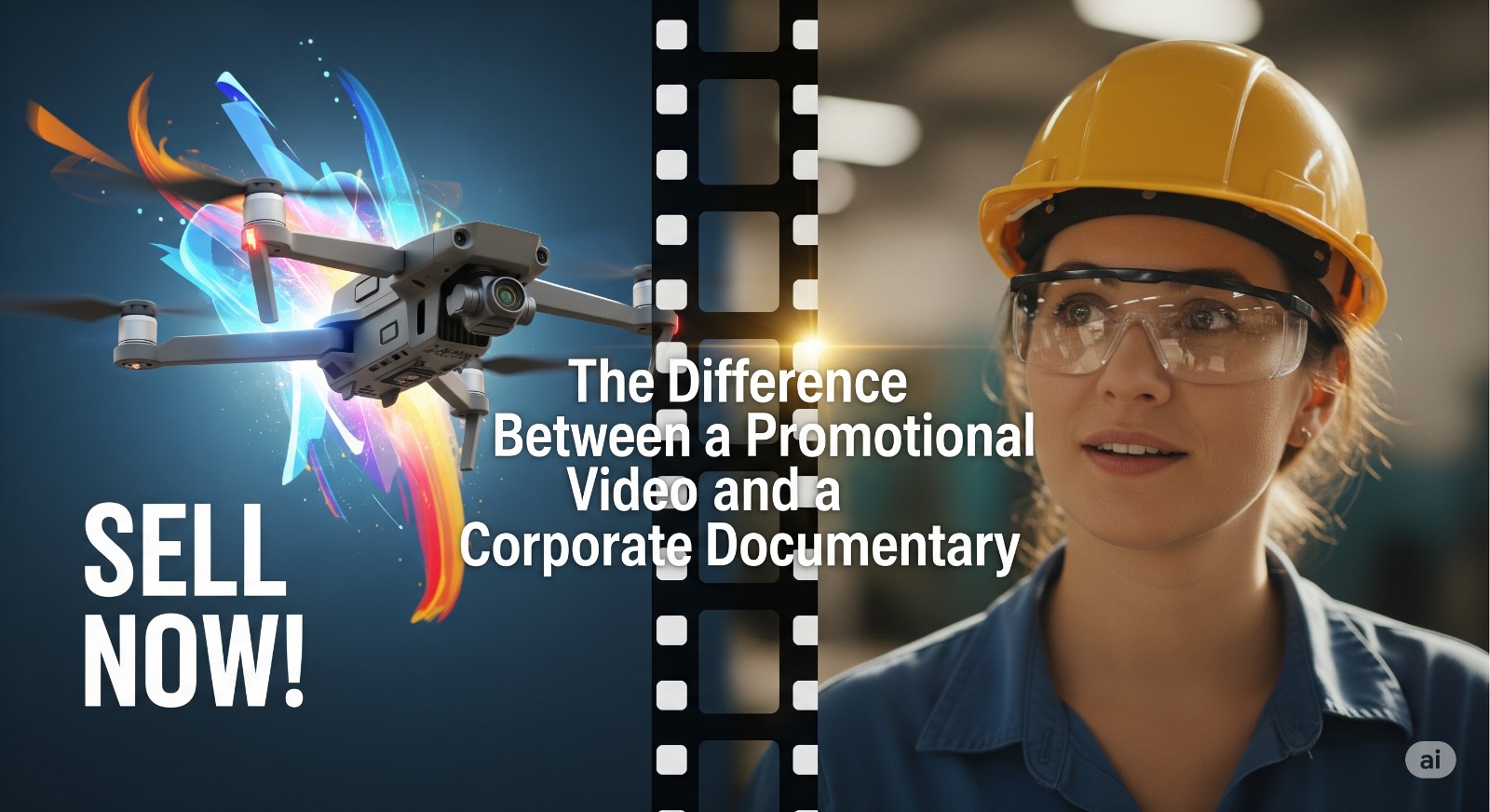
Many businesses think a video is a video. They’ll ask for a “Promotional Video” when what they really need is a compelling corporate documentary. While both are powerful tools for brand communication, they have fundamentally different goals, and understanding this distinction is crucial for getting the results you want.
This guide will demystify the two formats, breaking down their unique approaches to storytelling, and helping you decide which one is the perfect fit for your brand’s next message.
The Quick Answer: Selling vs. Storytelling
At its core, the difference is simple: a promotional video is designed to sell a product, service, or event directly, while a corporate documentary is designed to build long-term brand equity by telling a genuine, human story. One is a sales tool; the other is a narrative vehicle for trust and authenticity.
The Deep Dive: Key Differences in Approach
The distinct goals of each video type lead to major differences in how they are created and how they impact an audience.
- Primary Goal:
- Promotional Video: To generate immediate action. Its objective is to drive sales, sign-ups, or event registrations. It’s focused on benefits and features, answering the question: “Why should you buy this now?”
- Corporate Documentary: To build brand loyalty and trust. Its objective is to tell an authentic story about the company’s mission, origin, or impact. It answers the question: “Why should you believe in us?”
- Narrative Style:
- Promotional Video: The narrative is often fast-paced, visually dynamic, and focuses on the “what” and the “how.” It uses direct messaging and strong calls-to-action, often with an upbeat, energetic tone.
- Corporate Documentary: The narrative is slower, more reflective, and character-driven. It focuses on the “why” behind the company. It uses interviews, personal anecdotes, and a more cinematic style to create an emotional connection.
- Audience Engagement:
- Promotional Video: Engagement is measured by direct conversions—clicks, purchases, and leads. It connects with viewers on a rational level, convincing them of value.
- Corporate Documentary: Engagement is measured by a deeper emotional bond—shares, comments, and brand affinity. It connects with viewers on an emotional level, inspiring them with a story they can relate to.
- Production Approach:
- Promotional Video: Production is often highly controlled and scripted. Every shot, word, and graphic is meticulously planned to guide the viewer toward a specific action.
- Corporate Documentary: The approach is more organic. While it has a clear story arc, it often relies on candid interviews, authentic moments, and a willingness to let the story unfold naturally.
Real-World Examples
To make this distinction clear, let’s consider two examples for a fictional tech startup:
- Promotional Video: A 60-second video with fast cuts, animated graphics, and a voiceover that explains how the company’s new app can save users time and money. It ends with a clear “Download Now” button and a limited-time offer.
- Corporate Documentary: A 5-minute video that follows the company’s founder, telling the story of how a personal struggle inspired them to create a solution. It features interviews with early employees and customers, and ends with a message about the company’s mission to change the world for the better.
The choice between a promotional video and corporate documentary depends entirely on your marketing goal. If you need to drive immediate sales and conversions, a promotional video is your best bet. However, if you want to build a lasting, authentic brand that your audience trusts and believes in, a corporate documentary is the more powerful tool.